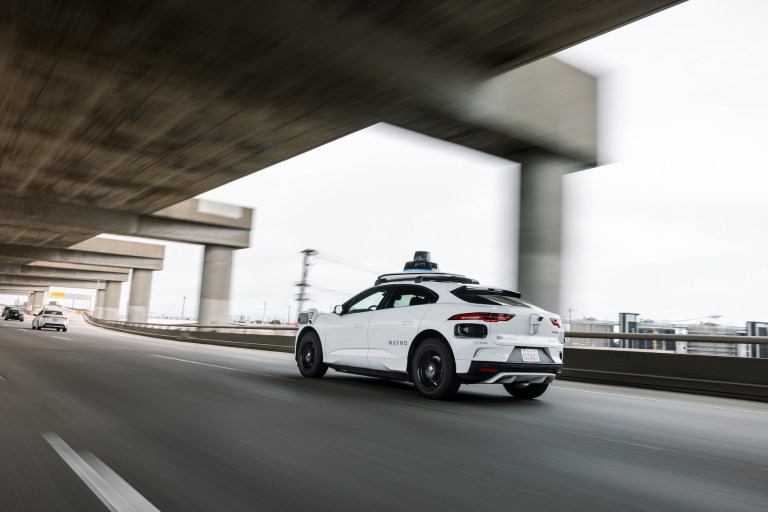
Waymo is betting that a new kind of “virtual human driver” will sharpen the debate over whether robotaxis are actually safer than people behind the wheel.
The Alphabet-owned company has unveiled a computer model, developed with researchers at TU Delft, that aims to capture how a careful, competent human driver behaves before and during a crash. Internally, Waymo calls it the “Reference Driver,” and it is meant to serve as a behavioral crash-test dummy for the age of autonomous vehicles.
Traditional safety models focus on the final split second before impact, essentially asking how a human might yank the wheel or slam the brakes at the last possible moment. Waymo’s new approach leans on a framework known as active inference: the idea that drivers are constantly imagining possible futures and adjusting their actions to steer toward the safest, most predictable outcome.
By modeling that continuous stream of expectations and “surprise,” the Reference Driver can simulate how a human would approach, perceive, and respond to a developing conflict, not just how they would react when it is too late. TU Delft’s Arkady Zgonnikov describes it as a way to quantify the internal jolt of alarm a driver feels when something suddenly goes wrong.
For Waymo, this is more than an academic exercise. The company is expanding its robotaxi services into new cities while regulators and the public scrutinize every incident. When a Waymo vehicle struck a child in a crosswalk in Santa Monica, the company leaned on its older model to argue that an attentive human would likely have hit the child at a higher speed than the robotaxi did. The new Reference Driver is intended to make such comparisons more realistic and defensible.
Waymo says the model can scale to thousands of real-world scenarios, from complex multi-vehicle crashes to subtle near-misses, and can be adapted to represent a wide range of road users, not just car drivers. That, the company argues, will let engineers test software changes in silico and identify safety improvements far faster than relying on rare real-world crashes.
In a bid to make the Reference Driver a broader standard, Waymo is releasing the research code under a non-commercial academic license, inviting universities and independent researchers to probe, challenge, and extend the model as the robotaxi industry fights to prove it can outperform humans on the road.