For many large companies, the promise of artificial intelligence collides with a stubborn reality: getting AI to work inside sprawling, legacy tech stacks is painfully hard. The challenge has become so acute that a new class of specialists, forward-deployed engineers, now parachute into enterprises just to wire AI tools into systems like Salesforce, ServiceNow, and Workday.
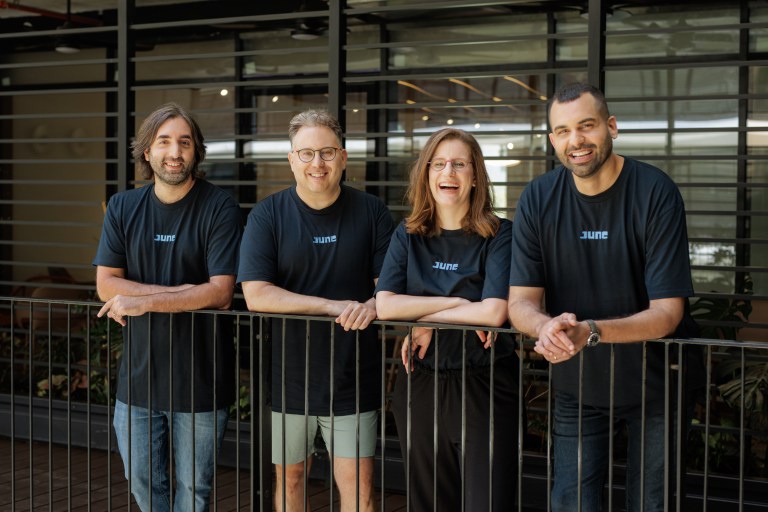
Efrat Rapoport, a former Salesforce executive, argues that this human-heavy approach is unsustainable. Her new startup, June, is betting that AI itself can automate much of the grunt work required to deploy AI in the first place. Backed by a 20 million dollar pre-seed round led by Marc Benioff’s Time Ventures, with participation from Michael Dell, Aaron Levie, and George Kurtz, June is positioning itself as an AI deployment engine for the enterprise.
Rapoport and cofounders Ohad Hen, Barak Goldstein, and Idan Tsitiat are not newcomers. Their previous company, Bonobo AI, built early language technologies and a voice-to-text service before being acquired by Salesforce. Inside the cloud giant, they watched customers struggle to translate AI demos into production systems weighed down by fragmented data, overlapping databases, and years of technical debt.
June’s platform starts by scanning a company’s existing systems to map business processes and identify bottlenecks. It then proposes new, agent-powered workflows and generates a detailed implementation plan. The software flags duplicate fields, missing connections, and broken data paths, and then offers one-click “build” actions so June can automatically rewire parts of the organization’s stack.
The goal is not just to design AI agents, but to make them actually usable in environments where a single customer record might be duplicated across ten fields and multiple teams. By turning that messy reality into a structured roadmap, June aims to replace weeks of meetings with architects and consultants.
That pitch resonated with Paul Akinmade, chief strategy officer at U.S. mortgage lender CMG. After moving his engineering team to AI coding tools, he hit a wall integrating them with Salesforce. Despite consulting internal experts and outside engineers, progress stalled. June, he says, finally gave his team a clear view of where and how to deploy agents safely, helping revive an ambitious plan to roll out dozens of AI agents across the company.
Rapoport insists June is a complement to consultants, not a replacement. Yet its appeal may lie precisely in helping enterprises avoid another wave of expensive, hard-to-scale human intervention in order to make AI work.