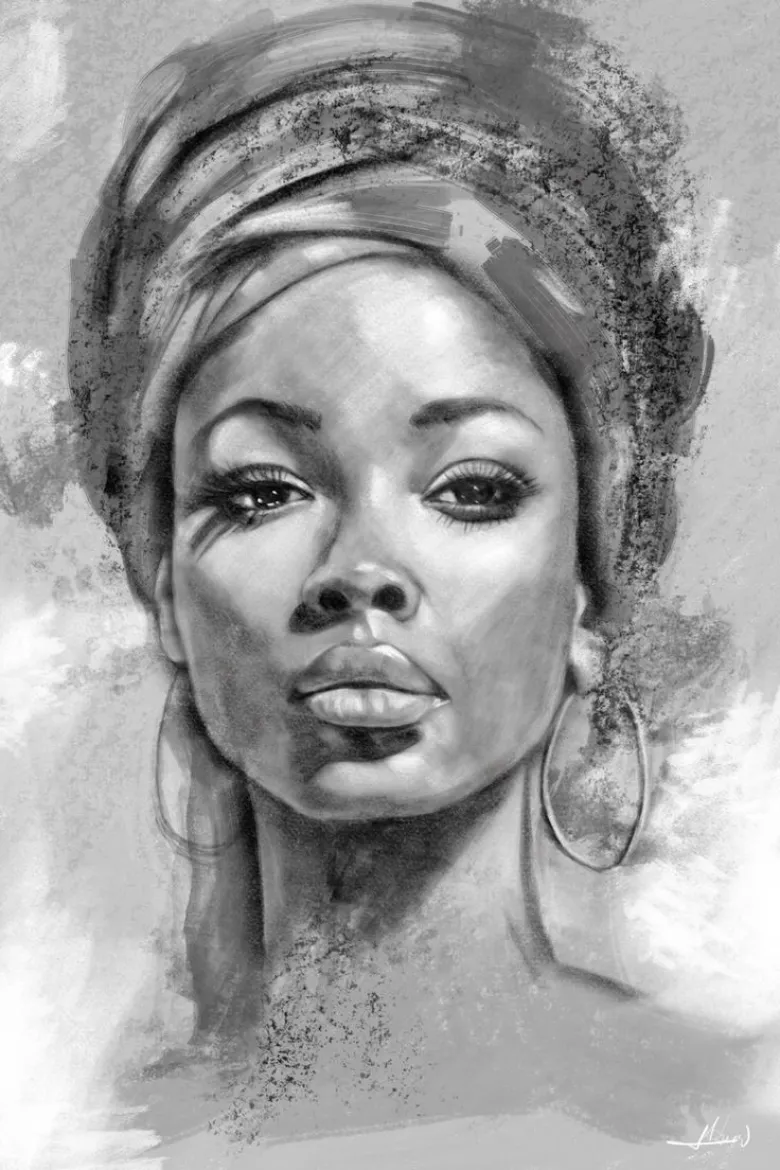
In the quiet town of Oraifite where traditions ran deep and customs were idolized. Among the most sacred was the belief that only sons could inherit. For families without a male heir, the bloodline was seen as withering, cursed to fade into nothingness.
Adaeze was born the only child to Mazi Obidike and his wife, Nneka, a proud couple known for their integrity and standing in the village. But with no sons, a shadow hung over their compound, an unspoken worry that turned to whispered decisions late at night. The elders knew, the kinsmen watched, and soon a decision was made. Adaeze would not marry out. Instead, she would remain under her father's roof, bear a son in his name, and become a male daughter.
To preserve the family lineage, they said
At fifteen, they told her.
"You are chosen, Adaeze," her father had said, his face lined with a blend of hope and sorrow. “This is not a burden. It is an honor. You will keep our name alive.”
Her mother held her hand that night and wept softly. “You are our only star. For you to shine, you must stay.”
And so, Adaeze stayed. When her mates danced in colourful dresses as brides, she watched from behind the curtains of her father’s compound. Suitors came and were turned away. Love letters burned in the hearth.
In time, she bore children, three daughters. No son.
The village murmured. Elders frowned politely. Even those who once praised her now shook their heads in pity. How could the daughter meant to become a son fail to produce one?
Then her father died. The compound fell into silence.
Two years later, her mother followed, leaving behind an emptiness that even the presence of her children could not fill. Adaeze walked the halls of the compound alone, her daughters playing in sand where once her ancestors walked with pride.
It was then that the weight of it all came crashing down.
She sat one night in front of the dim glow of the family shrine, her daughters asleep on raffia mats. And it struck her, how deeply she had obeyed, how loudly she had been silent.How foolish it had been.
She had been told it was an honor. But what honor was there in loneliness?
She had been told it was her destiny. But whose destiny was she really living?
The land had changed, girls were now doctors, engineers, lawyers. In Awka and Onitsha, women owned shops, built houses, even took titles. But here, in the name of custom, she had paused her life. And for what? A name carved in wood and memory?
She thought of her daughters, Nkemdilim, Ugochi, and Ifeoma; bright-eyed and curious. Would they too be asked to sacrifice themselves at the altar of tradition?
A new anger began to rise in her, not like fire but like a slow tide, steady and unrelenting. Not every custom was sacred. Not everything inherited was worth passing on.
She looked at the portrait of her father on the mud wall, his eyes distant and proud. “You meant well,” she whispered. “But meaning well is not enough.”
Adaeze stood, the night air brushing her face like a mother's palm. But she felt something shift an awakening. The strengthening of a resolve.
In the morning, she gathered her daughters.
“I have a story to tell you,” she said. “About a girl who did everything she was told, and what she learned when it was too late.”
They listened, their faces mirrors of her younger self. And when she was done, she told them something no one had told her:
“You have a right to choose. Your worth is not measured by the sons you bear or the names you keep. You are enough.”
In that moment, something ancient began to break, not with violence, but with truth. And though Adaeze could not rewrite her past, she would teach her daughters how to write theirs, with bold strokes and unshaken hands.
Because silence was no longer sacred.
And some customs can be chains.
.png?alt=media&token=845378e1-cf95-4bfa-beca-d69a6008a2e2)