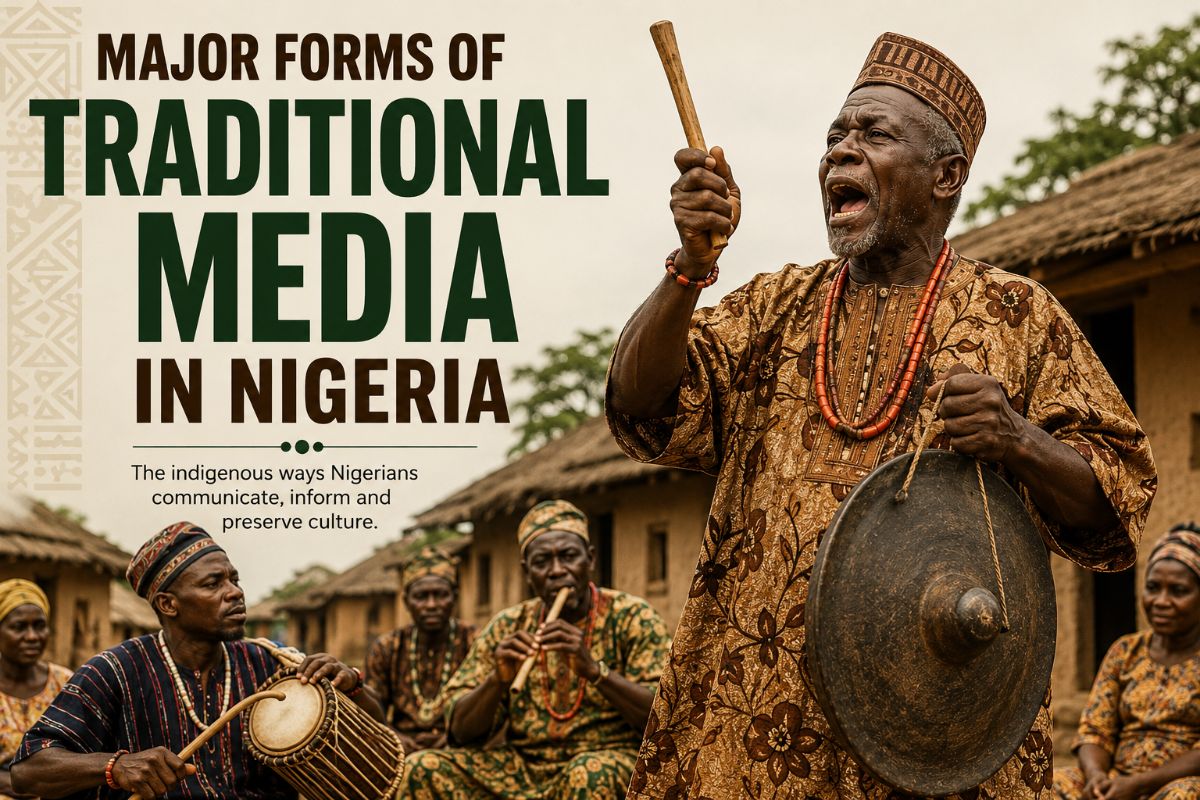
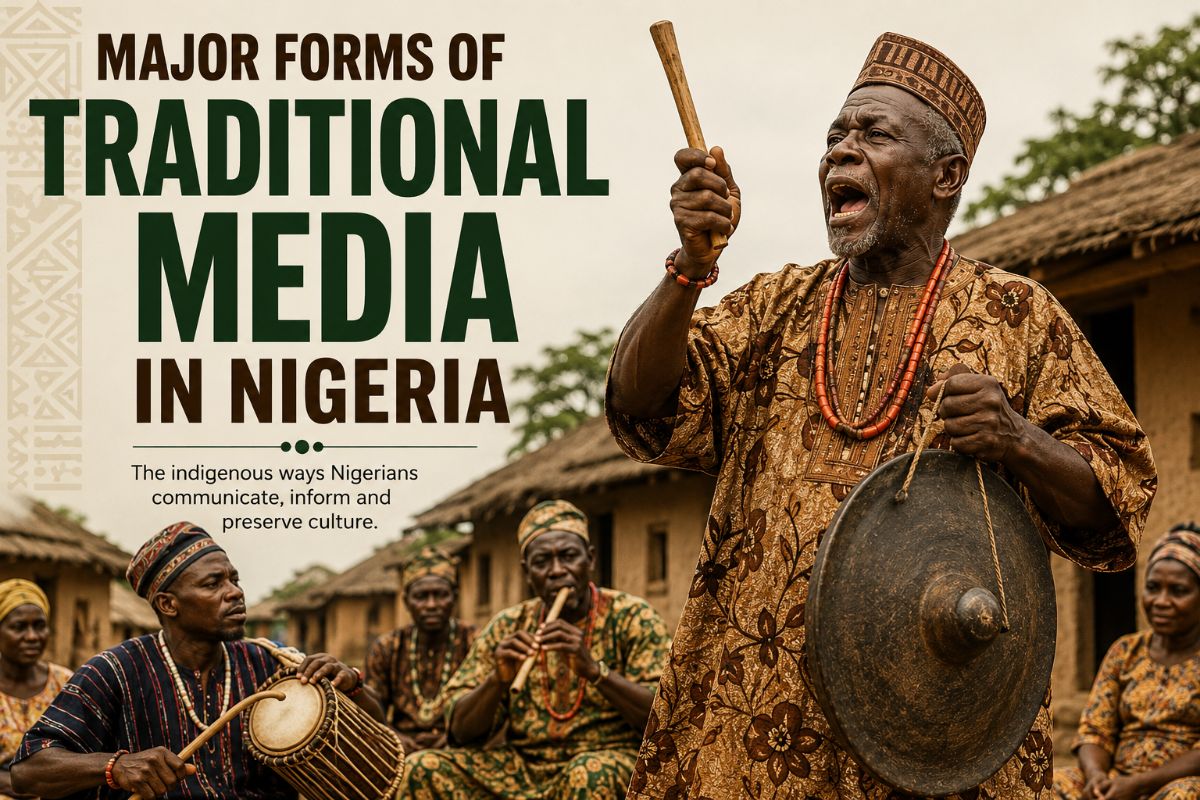
Traditional media refers to the indigenous means of communication developed and used by Nigerian communities before the widespread introduction of modern mass media such as newspapers, radio, television and the internet. These forms of communication are closely connected to the culture, language and social life of the people. They are used to disseminate information, educate people, entertain communities, preserve cultural values and mobilize people for communal activities.
One major form of traditional media in Nigeria is the town crier. The town crier serves as a link between traditional rulers or community leaders and the people. He usually moves around the community, often using a gong to attract people's attention before making announcements. He may announce community meetings, ceremonies, important decisions, emergencies and other important information.
Another major form is the use of drums, gongs and other traditional musical instruments. Talking drums, wooden gongs, metal gongs and other instruments have traditionally been used to communicate messages. Different sounds and rhythms may be used to summon people, announce important events or alert members of the community to danger. In some Igbo communities, the ikoro, a large wooden gong, is traditionally used to summon people and communicate important messages.
Oral tradition and storytelling are also important forms of traditional media. Through folktales, stories and oral history, information about the history, beliefs, customs and values of communities is passed from one generation to another. Storytelling is also used to educate younger people and teach them moral values and acceptable behaviour.
Proverbs, riddles and oral poetry are other forms of traditional communication. Proverbs are used to express wisdom, teach lessons, settle disputes and explain situations. Riddles provide entertainment and encourage mental development, while oral poetry can be used to preserve history, praise individuals and communicate social messages.
Traditional songs and dances also serve as communication channels. Songs can educate, entertain, preserve history and communicate important social messages. Traditional dances use movements, gestures, costumes and music to express cultural beliefs and community identity. They are commonly performed during festivals, ceremonies and other important occasions.
Traditional drama and folk theatre communicate messages through acting, storytelling, music and dance. They can educate people, entertain audiences and draw attention to social issues affecting the community. They also help to preserve cultural knowledge and traditions.
Festivals, village-square meetings, markets and other community gatherings are also important traditional communication channels. They provide opportunities for people to meet, exchange information, discuss community issues and participate in cultural activities. Traditional rulers and community leaders can use such gatherings to address the people and communicate important decisions.
In conclusion, traditional media have played and continue to play an important role in communication in Nigeria. Town criers, drums and gongs, oral tradition, storytelling, proverbs, riddles, songs, dances, drama, festivals and community gatherings have helped communities disseminate information, educate their members, preserve cultural heritage and promote unity. Although modern media are now widely used, traditional media remain relevant, especially at the grassroots level, because they are closely connected to the language, culture and everyday life of the people.