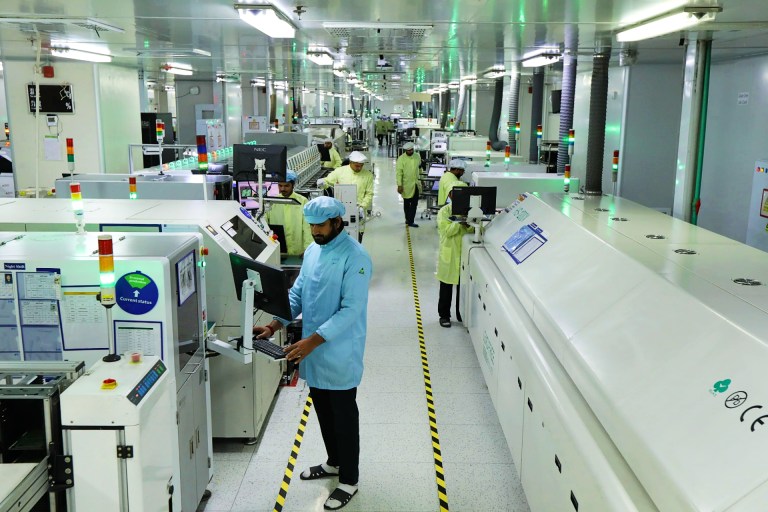
India has cleared a major new joint venture between Chinese smartphone maker Vivo and homegrown electronics giant Dixon Technologies, signaling a fresh chapter in the country’s ascent as a global smartphone manufacturing powerhouse.
The government’s approval unlocks a long-delayed plan first announced by the two companies, after regulators scrutinized the deal under rules that subject investments from neighboring countries, including China, to additional review. Under the arrangement, the new entity will acquire select Vivo manufacturing assets in India, take on a portion of Vivo’s smartphone production for the local market, and be free to build devices and electronics for other brands.
Dixon will hold 51 percent of the venture, with Vivo owning 49 percent. That majority-Indian structure is being closely watched across the industry as a potential template for how Chinese smartphone brands can expand manufacturing in India while navigating tighter investment rules and political sensitivities.
India has rapidly emerged as a key node in global smartphone supply chains, helped by generous production-linked incentives and Apple’s decision to scale up iPhone assembly through partners such as Foxconn and Tata. Apple now accounts for more than half of India’s smartphone exports by volume, according to Counterpoint Research, even though Chinese brands dominate domestic sales.
Chinese manufacturers control roughly three-quarters of India’s smartphone market but contribute less than a tenth of exports, highlighting the gap between their local sales footprint and their role in India’s export story. Policymakers see ventures like Vivo–Dixon as a way to close that gap, deepen local value addition, and reduce dependence on imports.
For Chinese brands, partnering with Indian companies has become more attractive since New Delhi tightened foreign investment rules and launched a series of tax and regulatory probes into major players including Oppo, Vivo, and Xiaomi. Handing majority control to an Indian partner offers a path to regulatory stability and better alignment with industrial policy.
Analysts say the Vivo–Dixon deal is a “win-win”: Vivo gains policy comfort and scalable manufacturing, while Dixon, already a contract producer for Xiaomi, secures additional volumes that could reach more than 20 million smartphones a year based on Vivo’s current sales. The move cements Dixon’s status as a central pillar of India’s electronics build-out and underscores how the country’s smartphone manufacturing boom is broadening beyond Apple to include Chinese brands operating under new rules of engagement.