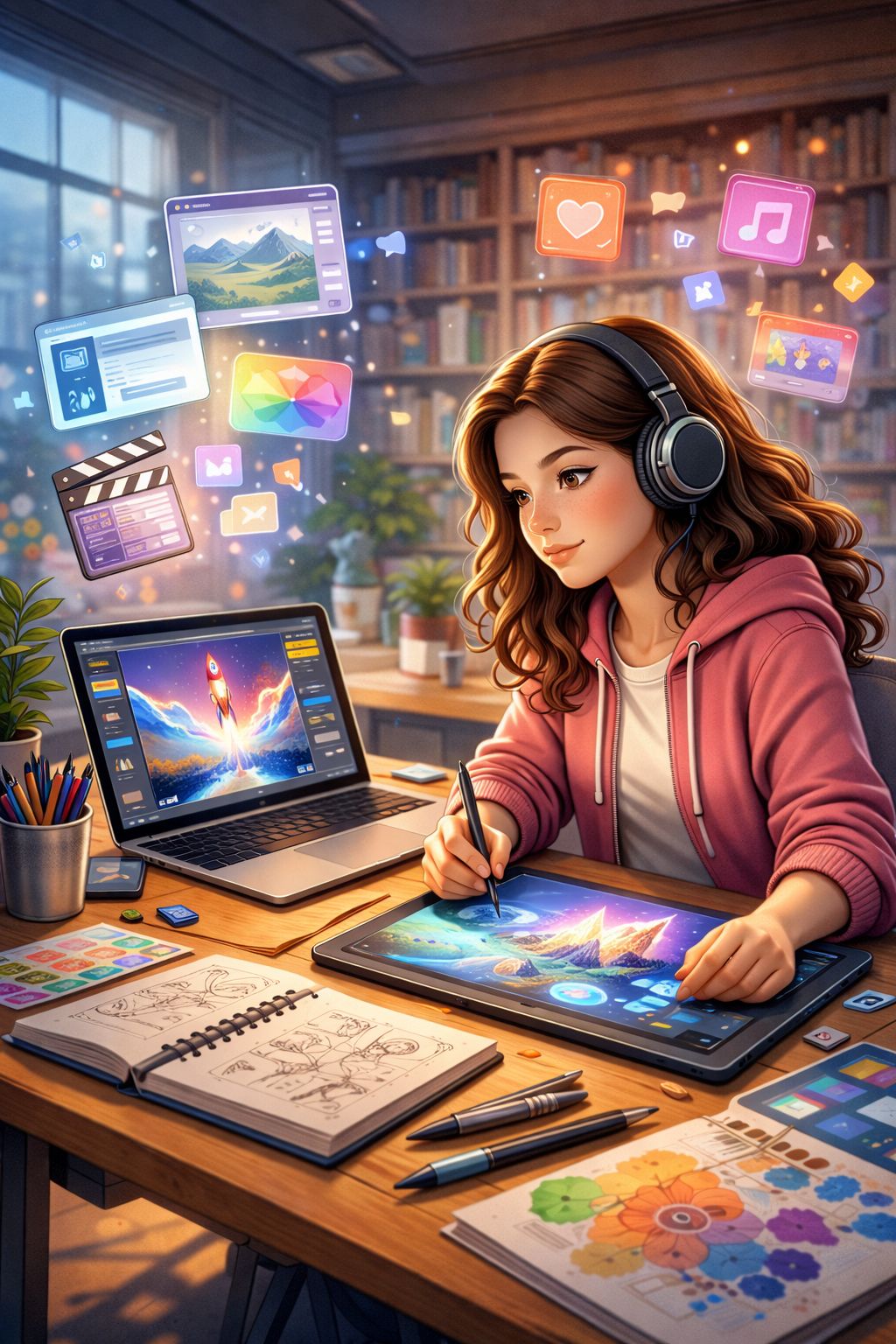
Not long ago, creativity required only a pen, paper, and imagination. Today, the creative space has expanded beyond notebooks and sketchpads into a vast digital world filled with tools that allow ideas to come alive in new and exciting ways. For the modern student, creativity is no longer limited by resources—it is amplified by technology.
Digital creativity simply means using technology to transform ideas into something real—a design, a video, a podcast, a piece of writing, or even a digital campaign. With the rise of smart tools, students can now turn simple ideas into powerful projects that can reach audiences across the world.
Imagine a student with an idea for a short story. In the past, that story might remain hidden in a notebook. Today, the same student can write the story digitally, design illustrations for it, record a narration, and share it online as a mini audio story or animated post. What once required a team of professionals can now begin from a student’s desk.
Technology is not replacing creativity—it is expanding it.
Artificial intelligence tools can help students brainstorm ideas, refine their writing, or explore different ways to present a concept. Design software can transform simple sketches into polished visuals. Video editing apps can turn ordinary recordings into compelling stories. Even platforms like podcasts and blogs allow students to express their voices in ways that were impossible a decade ago.
However, the heart of digital creativity still lies in human imagination. Technology provides the tools, but the ideas must come from the student. Creativity begins with curiosity—asking questions, exploring possibilities, and daring to think differently. When imagination meets technology, innovation happens.
For students, embracing digital creativity also builds valuable skills for the future. The modern world values individuals who can communicate ideas visually, tell stories, solve problems creatively, and share knowledge through digital platforms. Whether it is designing a presentation, producing a short video, or creating a digital campaign for a cause, these skills are becoming essential in many fields.
But there is also a responsibility that comes with this power. Students must learn to use digital tools ethically and thoughtfully. Creativity should inspire, educate, and uplift—not mislead or harm. The goal is not simply to create content, but to create meaningful content that contributes positively to society.
In the end, digital creativity is not about mastering every tool or software available. It is about using technology as a bridge between imagination and expression. The most powerful innovations often begin with a simple idea and a curious mind willing to explore it.
For today’s student, the opportunity has never been greater. With creativity in the mind and technology in their hands, they have the power to turn ideas into stories, concepts into designs, and thoughts into movements that can inspire others.
The tools are digital—but the creativity is deeply human.