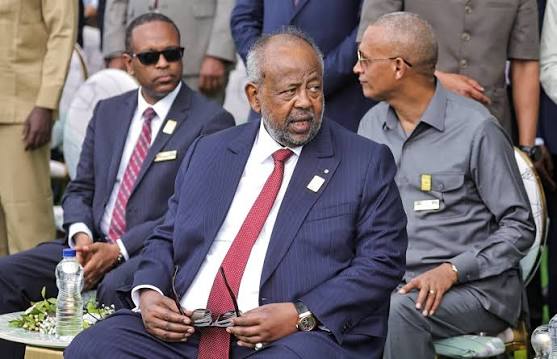
Djibouti’s long-time ruler Ismail Omar Guelleh is widely expected to secure a sixth presidential term in a vote that opposition figures and rights groups describe as neither competitive nor genuinely democratic.
Guelleh, 78, has dominated the tiny Horn of Africa nation since 1999, building a highly centralised system of power around his office and inner circle. Known by his initials, IOG, he has overseen the transformation of an arid former French colony into one of the world’s most strategic military and maritime crossroads.
Djibouti’s location at the mouth of the Bab al-Mandab strait, the narrow chokepoint linking the Red Sea to the Gulf of Aden, has made it indispensable to global trade and to foreign powers seeking a foothold near the Suez Canal. Around this strip of water, where shipping has been rattled by regional conflict and attacks linked to Yemen’s Houthi movement, Djibouti markets itself as an island of stability.
That stability has attracted a dense cluster of foreign bases. France maintains its largest African garrison there, while the United States operates its only permanent base on the continent, a hub for operations in Somalia and beyond. China opened its first overseas military base in Djibouti, and Japan and Italy also station troops in the country. Port deals with Gulf powers, including Saudi Arabia, have further entrenched Djibouti’s role as a logistics and security hub for the wider region and for landlocked Ethiopia, which relies heavily on Djiboutian ports.
At home, however, Guelleh’s rule is marked by allegations of repression and patronage. Human rights organisations accuse the government of crushing dissent, jailing critics and muzzling independent media. The country ranks near the bottom of global press freedom indices, and opposition parties complain of harassment, co-optation and structural exclusion from power.
Only about 256,000 registered voters are being asked to choose between Guelleh and a single challenger, Mohamed Farah Samatar, a former ruling-party member whose small Unified Democratic Centre holds no parliamentary seats. Local rights advocates have dismissed the contest as a “masquerade,” arguing that the challenger poses no real threat to the incumbent.
Guelleh’s previous re-election, with an official tally of 97 percent, followed an opposition boycott. A constitutional change scrapped the upper age limit for presidential candidates, clearing the way for his current bid. Analysts say that while questions linger over his health, the president’s family and close allies are already positioned at the heart of the system he has spent nearly three decades constructing.