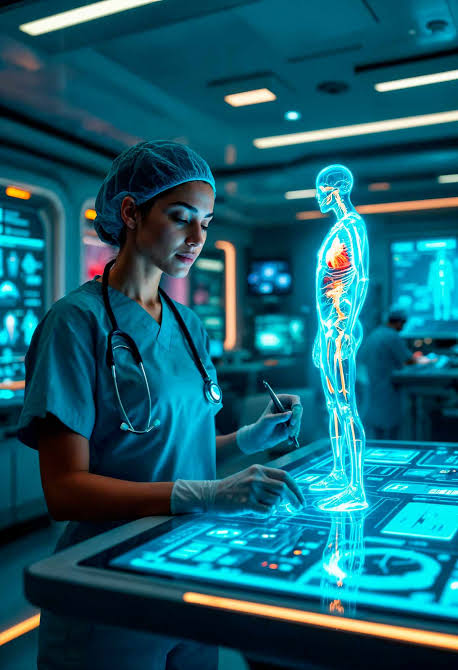
Artificial Intelligence Is Changing the Way Diseases Are Diagnosed
Byline: Olanipekun Oluwatobi Joshua
Artificial Intelligence (AI) is rapidly transforming healthcare by improving how diseases are diagnosed and detected. Hospitals and medical research centers around the world are now using AI-powered systems to support doctors in making faster and more accurate medical decisions.
AI works by analyzing large amounts of medical data such as patient records, laboratory results, and medical images. In diagnostic imaging, AI software can examine X-rays, CT scans, and MRI images to identify abnormalities that may indicate diseases like cancer, tuberculosis, or heart conditions. These systems are trained to recognize patterns that are often difficult for the human eye to detect, especially in the early stages of illness.
Medical experts explain that AI does not replace doctors but acts as a decision-support tool. By reducing the chances of human error and speeding up diagnosis, AI allows healthcare professionals to focus more on patient care and treatment planning. In emergency situations, AI systems can help prioritize critical cases, ensuring that patients receive timely attention.
In developing countries, AI-driven diagnostic tools are proving especially useful. Many rural and underserved areas lack access to specialist doctors. With AI-powered platforms, healthcare workers can upload patient data and receive diagnostic suggestions within minutes, improving healthcare delivery in remote communities.
Despite its benefits, concerns remain about data privacy and ethical issues. Health professionals stress the need for strong data protection laws to safeguard patient information. However, as technology continues to advance, artificial intelligence is expected to play an increasingly important role in improving disease detection, reducing mortality rates, and strengthening healthcare systems globally.