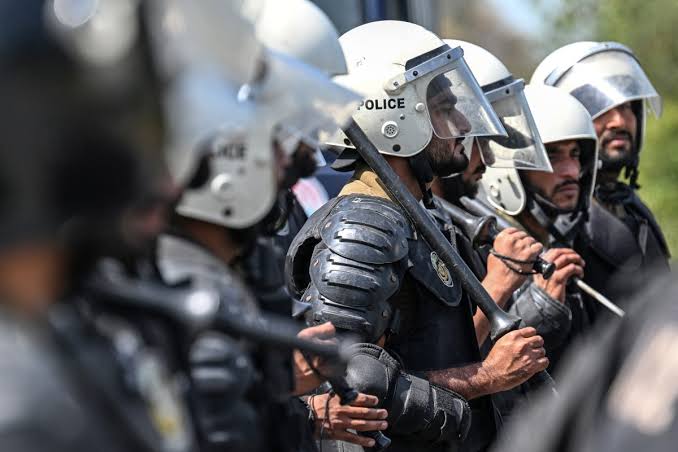
Riot police in helmets and body armor line Islamabad’s normally sedate Red Zone, a visible reminder that the stakes of the US Iran talks under way in Pakistan extend far beyond the city’s quiet streets. Inside a tightly guarded venue, envoys from Washington and Tehran are attempting to turn a fragile ceasefire into a framework that could end the most dangerous confrontation in the Gulf in decades.
The talks follow a devastating chain of events. Coordinated US and Israeli strikes killed Iran’s Supreme Leader Ali Khamenei and crippled key military and nuclear sites, leaving thousands dead and Tehran vowing revenge. Iran’s response was to choke off the Strait of Hormuz, a narrow waterway that carries roughly a fifth of the world’s oil and gas. Energy prices spiked, shipping routes were scrambled and pressure mounted on all sides to halt a slide toward regional war.
Pakistan’s emergence as mediator is striking. Long associated with political turmoil and militancy, Islamabad is now hosting the highest level US Iran engagement in years. Its leverage rests on a rare diplomatic balance. Iran was the first state to recognize Pakistan after independence, and the two share a long border and deep cultural and religious ties, including one of the world’s largest Shia populations outside Iran. At the same time, Pakistan maintains close security and economic relationships with the United States, Saudi Arabia and China.
Beijing’s role is widely seen as pivotal. Pakistani and US officials say Chinese diplomacy helped bring Iran to the table when an initial ceasefire seemed to be slipping away. While Pakistan brokered the truce, Chinese pressure on Tehran is credited with securing Iran’s agreement to pause hostilities and explore a broader deal.
On the table are rival roadmaps. Washington’s reported 15 point proposal focuses on rolling back Iran’s nuclear and missile programs, reopening Hormuz and sequencing sanctions relief. Tehran’s 10 point counterplan demands control over the strait, the right to levy transit fees, an end to regional military operations and the lifting of all sanctions. Disputes over Lebanon and Israeli strikes on Hezbollah positions threaten to derail progress, with Iranian leaders warning that continued attacks could render the Islamabad process meaningless.
The delegations underscore the gravity of the moment. US Vice President JD Vance leads the American side, joined by senior envoys with experience in past nuclear negotiations. Iran is represented by parliamentary speaker Mohammad Bagher Ghalibaf, a former Revolutionary Guard commander, and Foreign Minister Abbas Araghchi, a veteran of earlier talks. They are not expected to meet face to face. Instead, Pakistani officials shuttle between rooms in a classic form of indirect diplomacy, hoping to turn a tenuous pause in fighting into the outline of a lasting settlement.