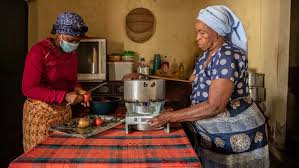
African governments and international partners have announced a fresh $900 million pledge to expand access to clean cooking, pushing total commitments to more than $3.1 billion since the Africa Clean Cooking Summit galvanized global attention on the issue.
The new funding is aimed at replacing traditional charcoal and firewood with cleaner fuels such as liquefied petroleum gas, biogas, ethanol and electric cooking solutions. These technologies are expected to cut deadly household air pollution, reduce deforestation and ease the daily burden on women and girls who often spend hours collecting firewood.
According to the International Energy Agency, nearly one billion people across Africa still rely on polluting fuels and rudimentary stoves. The resulting smoke and soot are linked to an estimated 850,000 premature deaths every year, making household air pollution one of the continent’s most severe but underreported health threats.
Kenyan President William Ruto, speaking during a high-level virtual meeting convened to track progress since the summit, warned that finance remains the single biggest barrier to universal access. He argued that political ambition and policy reforms must be matched by large-scale, predictable investment if African countries are to meet their clean cooking and climate goals.
The IEA reports that about $740 million from earlier commitments has already been deployed in 22 African countries. Those funds are supporting projects ranging from subsidized clean stoves and pay-as-you-go LPG systems to grid upgrades that make electric cooking viable for low-income households.
Governments have also stepped up policy action, introducing more than 120 new measures to promote clean cooking. These include tax incentives for efficient stoves, targeted subsidies for vulnerable households, and national strategies that integrate clean cooking into health, energy and climate plans.
To safeguard progress, the IEA has launched a programme to strengthen global cooking fuel supply chains after disruptions to LPG shipments through the Strait of Hormuz exposed Africa’s vulnerability to external shocks. The initiative seeks to diversify supply routes, improve storage infrastructure and support local production of alternative clean fuels.
Energy analysts say the latest $900 million pledge signals growing recognition that clean cooking is not just a household issue but a cornerstone of public health, gender equality and climate resilience across Africa.