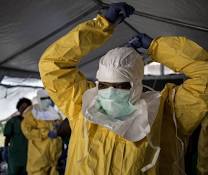
Health authorities in the Democratic Republic of the Congo are scrambling to trace nearly 300 people who tested positive for Ebola and have since disappeared from official monitoring systems, raising fears of silent transmission chains in a region already battered by conflict.
Africa CDC officials say the missing patients were identified through laboratory testing but could not be followed up by surveillance teams. Many are believed to have fled areas of active fighting, moved across porous borders, or gone into hiding amid deep mistrust of state institutions and foreign-backed health workers.
The DRC’s east, where most recent Ebola flare-ups have occurred, is a patchwork of territories controlled by the national army, local militias, and foreign-backed armed groups. Health workers describe trying to reach patients in zones where roads are cut, convoys are ambushed, and entire villages are displaced overnight. In some districts, response teams must negotiate access with multiple armed actors before they can even begin contact tracing.
Public health experts warn that losing track of so many confirmed cases undermines the core strategy used to stop Ebola: rapidly isolating patients, monitoring their contacts, and vaccinating those at highest risk. Each unmonitored patient can infect family members, caregivers, or fellow displaced people, potentially seeding new clusters far from the original outbreak sites.
Community resistance is compounding the crisis. Years of violence, political marginalization, and broken promises have fueled suspicion toward government campaigns. Rumors that Ebola is fabricated for profit or political gain have led some families to hide sick relatives or refuse to cooperate with burial teams, who are essential to preventing transmission from highly infectious corpses.
Health officials are now trying to adapt. Local leaders, religious figures, and community health volunteers are being enlisted to persuade families to report symptoms early and accept vaccination. Mobile teams are setting up temporary clinics in displacement camps and along major transit routes, hoping to catch cases that slip through formal surveillance.
Regional agencies are also urging neighboring countries to strengthen screening at border crossings and improve data sharing, warning that the disappearance of hundreds of confirmed Ebola patients in the DRC is not just a national emergency but a threat to public health across Central and East Africa.
.jpeg?alt=media&token=96b327a5-8e62-4ed1-a078-308aff149ed1)