By Jaiyeoba Testimony Anike/300level Mass Communication UNILAG
How GMOs End Up on Our Plates
When people talk about GMOs, they often imagine a secret laboratory and strange experiments. What they rarely picture is the farmer in the sun, the trader in the market, or the student cooking a quick meal. But GMO foods do not jump straight from a lab into your body. They take a long, very human journey.
It usually starts with a problem on the farm.
A crop keeps getting destroyed by insects. A plant struggles to grow when rainfall becomes unpredictable. Harvests drop, and farmers lose money and food. These problems are not abstract. They affect real people who depend on crops to survive.
This is where scientists step in, not as villains, but as problem solvers.
In controlled labs, researchers study plants and look for specific traits. Maybe a plant already exists that can fight off certain pests. Scientists identify that trait and carefully introduce it into another crop. The goal is simple. Help the plant grow better under real conditions.
Once this process is complete, the work is far from over. The crop is tested repeatedly to be sure it grows as expected. It is observed over time, across different environments. Only after this stage does it move out of the lab and into the hands of farmers.
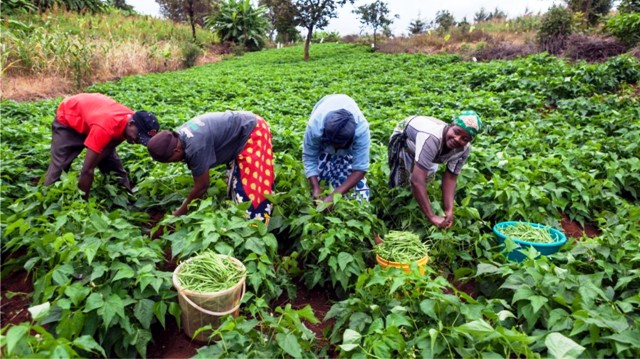
On the farm, GMO crops are planted like any other crop. Farmers water them, watch them grow, and protect them. For many farmers, these crops mean fewer losses and more stable harvests. It can also mean using fewer chemicals to protect plants, since some GMOs are designed to resist pests on their own.
From there, the journey continues.
After harvest, GMO crops are taken to processing centers or markets. Corn may be turned into flour. Soybeans may become cooking oil. Cotton may not end up on a plate at all, but still plays a role in everyday life. At this stage, GMO crops look no different from non-GMO ones. They are cleaned, packaged, and distributed.
Then comes the part we recognize most.
The market stall. The supermarket shelf. The food vendor. The kitchen.
By the time GMO foods reach consumers, they are no longer ideas or theories. They are ingredients. Rice cooking in a pot. Oil heating in a pan. A meal shared with friends or eaten in a rush between classes.
Most people eating these foods are not thinking about genes or science. They are thinking about taste, price, and availability. And that is part of what makes the GMO conversation interesting. It lives quietly in everyday life, even when we are not paying attention.
Understanding this journey helps remove some of the fear around GMOs. It reminds us that behind the word are people. Scientists trying to solve problems. Farmers trying to feed communities. Consumers just trying to eat.
GMOs are not just lab creations. They are part of a long chain that connects science to soil, and farms to forks. And once you see that journey clearly, the topic feels less distant and much more real.