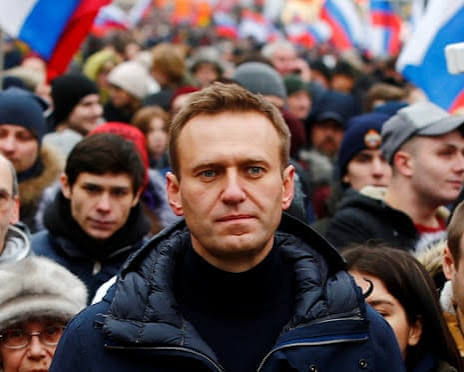
The Kremlin has forcefully rejected a joint assessment by five European governments that Russian opposition leader Alexei Navalny was killed with a rare frog-derived toxin while in prison, denouncing the conclusion as politically motivated and unfounded.
Spokesman Dmitry Peskov said Moscow “does not accept” the allegation that Navalny was poisoned with epibatidine, a powerful neurotoxin originally identified in an Ecuadorian dart frog and now known to be producible synthetically. Russian authorities maintain that the 47-year-old anti-corruption crusader died suddenly of natural causes in a remote Arctic penal colony, where he was serving a 19-year sentence on charges widely condemned abroad as fabricated.
The disputed findings come from Britain, France, Germany, the Netherlands and Sweden, whose forensic experts say laboratory analysis of biological samples taken from Navalny’s body detected traces of epibatidine. In a joint statement, they argued that the toxin’s extreme potency and his reported symptoms made poisoning “highly likely” as the cause of death, directly contradicting Moscow’s narrative.
London has gone further than its partners, bluntly asserting that only the Russian state had “the means, motive and opportunity” to deploy such a substance. British officials say they are weighing additional sanctions against Russia, signalling that Navalny’s death could trigger another round of punitive measures targeting senior figures and security structures close to the Kremlin.
Washington has not formally joined the European declaration but is pointedly refusing to challenge it. US Secretary of State Marco Rubio described the report as “very troubling” and said the United States had “no reason to question” the European conclusions, framing the decision to stay off the document as procedural rather than political.
For Navalny’s widow, Yulia Navalnaya, the European findings amount to confirmation of what she has long alleged. She has said that independent laboratories, working with samples smuggled out by supporters, previously detected signs of poisoning, and she now calls the new report “science proven” evidence that her husband was murdered.
French Foreign Minister Jean-Noel Barrot used the conclusions to deliver one of the harshest rebukes yet from a senior Western official, accusing President Vladimir Putin of being prepared to use “biological weapons against his own people” to cling to power.