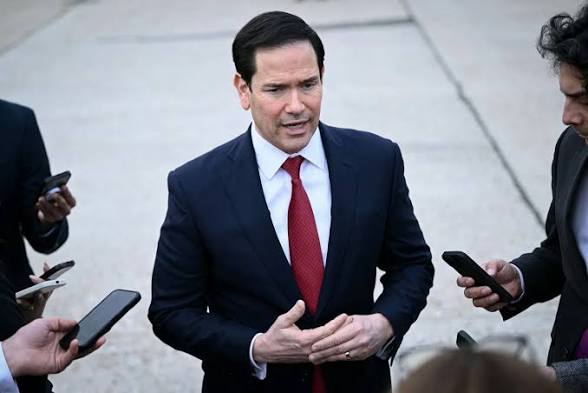
US Secretary of State Marco Rubio has signaled that Washington may fundamentally reassess its commitment to the NATO alliance once the ongoing war against Iran is over, raising fresh questions about the future of transatlantic security cooperation.
Speaking in a televised interview with Fox News host Sean Hannity, Rubio said the United States “is going to have to reexamine” its relationship with NATO in light of the alliance’s response to the conflict. He framed the issue not as a theoretical debate, but as a practical question of whether NATO still serves core US strategic interests.
“I think there’s no doubt, unfortunately, after this conflict is concluded, we are going to have to reexamine that relationship,” Rubio said. “We’re going to have to reexamine the value of NATO in that alliance for our country.” He stressed that any ultimate decision would rest with President Donald Trump, but his remarks underscored growing frustration within the administration.
Rubio, a longtime supporter of the alliance, emphasized that his skepticism marks a sharp departure from his previous stance. As a senator, he said, he had been “one of the strongest defenders of NATO” because he believed it provided “great value,” particularly through the network of US bases across Europe that enable rapid deployment and power projection into the Middle East, Africa, and beyond.
That calculation, he suggested, is now in doubt. “If now we have reached a point where the NATO alliance means that we can’t use those bases, that in fact we can no longer use those bases to defend America’s interests, then NATO is a one-way street,” Rubio argued.
His comments followed a series of decisions by European governments to limit US military operations linked to the Iran campaign. Italy recently denied landing permission to a US aircraft headed to the Middle East for a combat mission, while Spain closed its airspace to US planes conducting sorties against Iranian targets.
Rubio noted that Washington was not demanding that NATO allies join airstrikes or commit combat forces. Instead, he said, the expectation was basic operational support. “When we need them to allow us to use their military bases, their answer is ‘No?’ Then why are we in NATO? You have to ask that question.”
The remarks highlight a widening rift between Washington and key European capitals over the scope of support for US-led military operations, and they raise the prospect of a postwar debate that could reshape the Western security architecture.