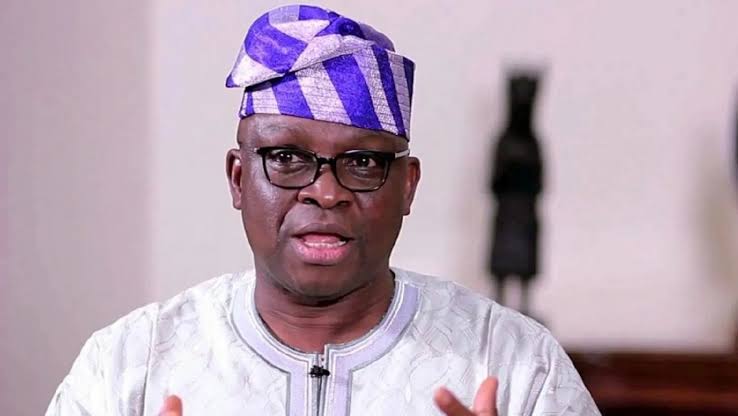
Former Ekiti State governor Ayodele Fayose has warned that the African Democratic Congress faces electoral irrelevance in the 2027 presidential race if Peter Obi is not its candidate.
Fayose, a prominent figure in the Peoples Democratic Party, linked the ADC’s viability directly to Obi’s participation, arguing that the former Anambra State governor remains the opposition figure with the strongest grassroots appeal among younger and urban voters.
Speaking at the PDP national convention in Abuja, Fayose used his intervention to assess both the state of the opposition and the performance of President Bola Tinubu’s administration. He delivered a nuanced critique of Tinubu, acknowledging some efforts by the president while insisting that overall governance outcomes remain disappointing when measured against Nigerians’ expectations and past administrations.
“You don’t have to have 100 percent of any issue before you are said to be doing well, but when you relate our past with our present, he is not doing well,” Fayose said, arguing that hardship, inflation and insecurity continue to shape public perception of the government.
Turning to the opposition landscape, Fayose said the ADC’s fortunes are tied to whether Obi appears on its presidential ticket. He claimed that without Obi, the party would struggle to mount a credible national challenge.
“If Obi is not on the ballot of ADC, that is the end of ADC,” he declared, suggesting that in Obi’s absence, former vice president Atiku Abubakar is best positioned to secure the party’s nomination.
Fayose also cast doubt on speculation that Obi might return to the Labour Party, the platform on which he ran in the last presidential election and built a strong youth-driven movement.
“It’s impossible for him to go back to the Labour Party. Obi is a good guy, he’s a fantastic guy, but to become the president at this time is difficult,” he said, implying that internal party dynamics and shifting alliances have narrowed Obi’s options.
Fayose’s comments underscore the fluid nature of opposition politics as parties and power brokers jostle for advantage ahead of 2027, with Obi’s next move seen as a critical factor in shaping the emerging political map.