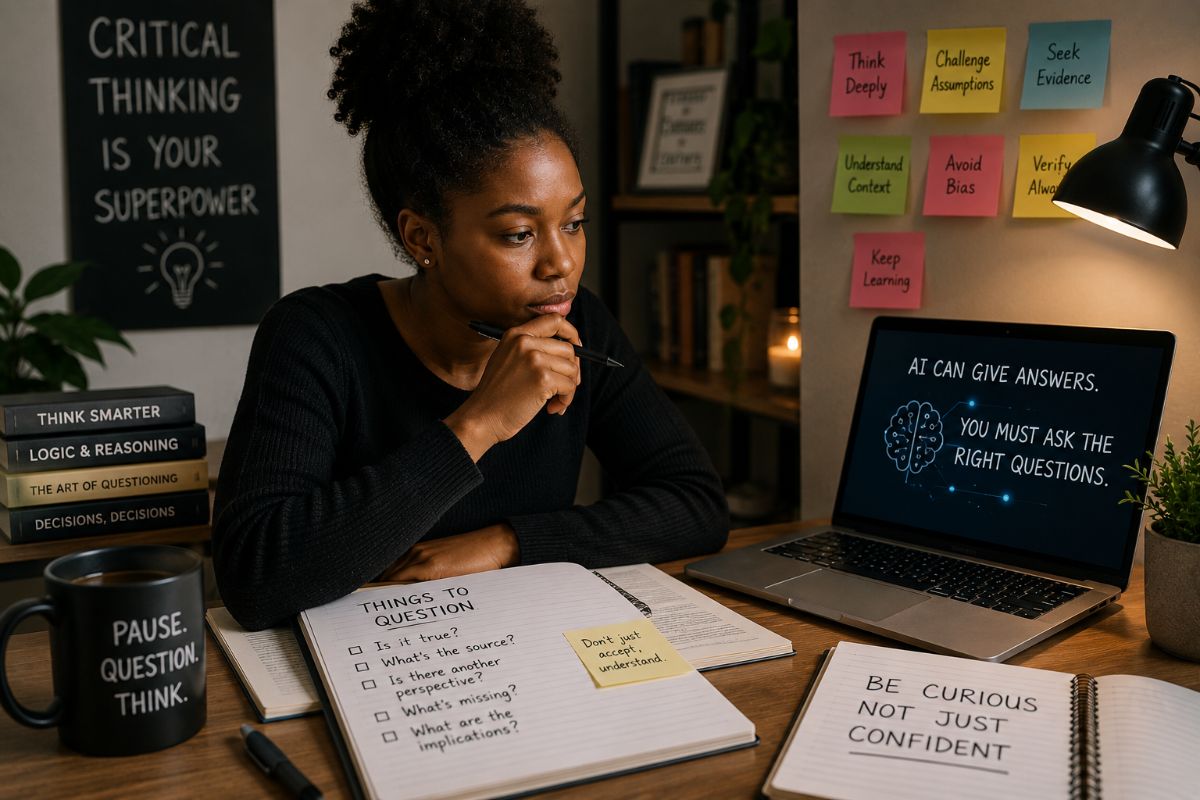
Artificial intelligence is changing how we work, learn, and communicate. From writing emails and creating presentations to answering complex questions, AI tools have become part of everyday life. While these technologies save time and increase efficiency, they have also made one human skill more valuable than ever: critical thinking.
AI can generate answers within seconds, but it cannot replace human judgment.
Not everything produced by AI is accurate. Sometimes it presents outdated information, misunderstands context, or confidently states something that isn't true. This means users must learn to question, verify, and evaluate information rather than accepting every answer at face value.
Critical thinking involves asking important questions. Is this information supported by evidence? Does it make sense? Is there another perspective? Are there reliable sources that confirm it?
These habits protect us from misinformation, manipulation, and poor decision-making.
In the workplace, employers increasingly value people who can analyze problems, identify risks, and make sound decisions. AI can assist with research, but humans still decide what actions to take.
Critical thinking is equally important outside work. It helps us interpret news responsibly, recognize scams, evaluate financial opportunities, and make informed life choices.
As AI continues to improve, success will belong not only to those who know how to use technology but also to those who know when to question it.
The future belongs to people who combine technological skills with wisdom, curiosity, and sound judgment. AI can be a powerful assistant, but critical thinking remains one of humanity's greatest strengths.