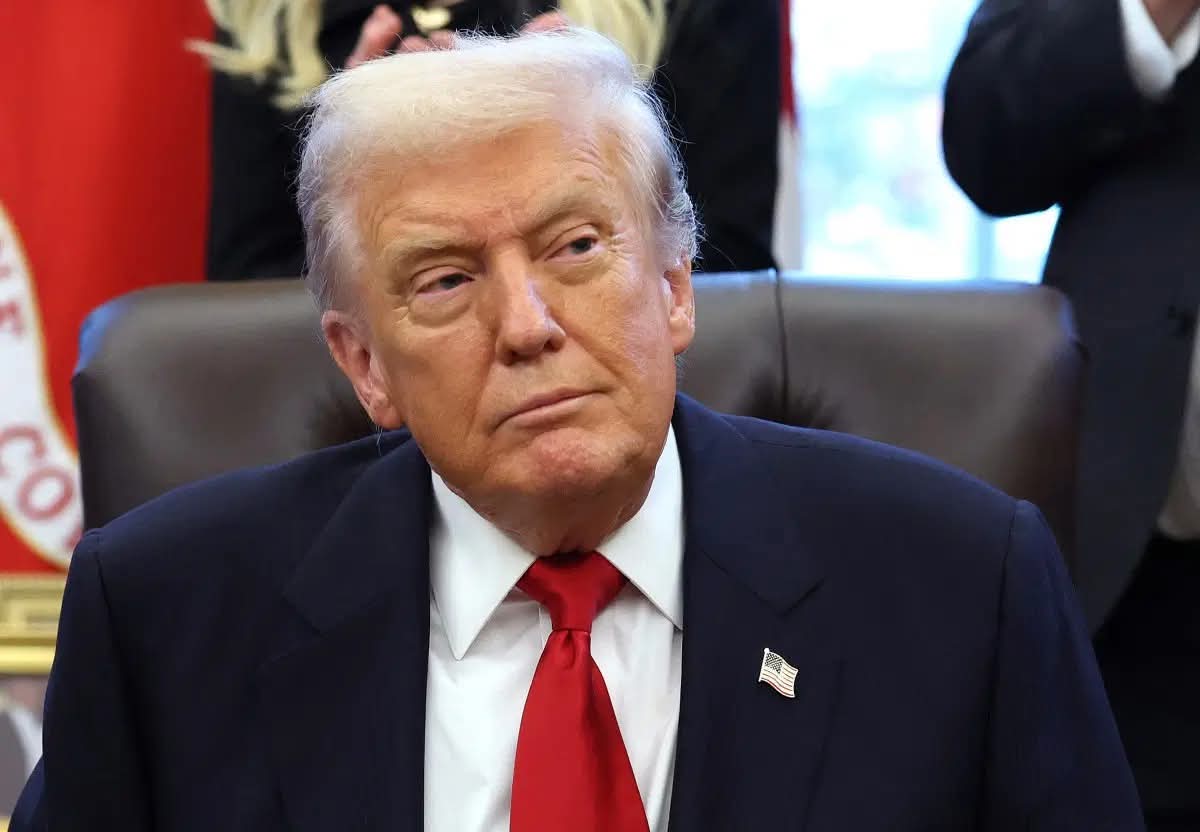
President Donald Trump has ordered a fresh 10 percent tariff on nearly all imports into the United States, moving swiftly to reassert his trade agenda just hours after the Supreme Court struck down a key legal basis for many of his earlier duties.
Signing the directive in the Oval Office and declaring it “effective almost immediately,” Trump framed the move as a necessary defense of US interests, even as the court delivered one of the sharpest rebukes yet to his economic policy. The new levy is scheduled to take effect for 150 days, with exemptions for sectors under separate investigations, including pharmaceuticals, and for goods covered by the US-Mexico-Canada Agreement, according to a White House summary.
The blanket 10 percent rate will also apply to countries that had previously negotiated bespoke tariff arrangements with Washington, effectively overriding higher, tailor-made deals. A senior administration official said the White House would later explore ways to restore “more appropriate or pre-negotiated tariff rates,” but offered no timetable.
The Supreme Court, in a 6–3 decision, ruled that the 1977 International Emergency Economic Powers Act does not authorize a president to unilaterally impose tariffs. Chief Justice John Roberts wrote that if Congress had intended to grant such “distinct and extraordinary power,” it would have done so explicitly, as in other trade statutes.
The decision leaves intact Trump’s sector-specific tariffs on steel, aluminum and a range of other products, as well as ongoing investigations that could yield new targeted duties. But it undercuts the legal foundation for many of his most abrupt, country-specific measures and represents his most significant judicial setback since returning to the White House.
Trump, who appointed two of the justices in the majority, lashed out at the court, claiming without evidence that foreign interests had influenced the ruling. He insisted the decision ultimately strengthened his hand, arguing that “to protect our country, a president can actually charge more tariffs” than he had before.
Financial markets reacted calmly, with stocks edging higher as investors welcomed greater legal clarity. Business groups largely applauded the ruling, though they warned that the new across-the-board tariff would keep pressure on supply chains and consumers.
Academic models suggest the effective average tariff rate on US consumers will fall but remain historically elevated, while close allies such as the European Union, Britain and Canada are bracing for a more unpredictable phase in US trade policy.