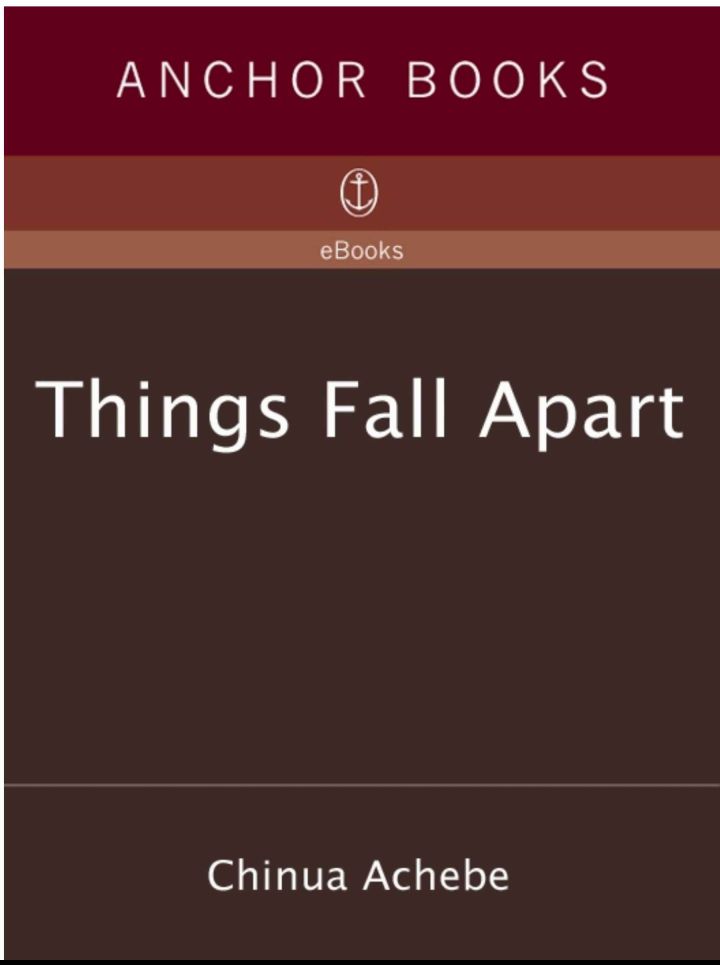
Book Title: Things Fall Apart
Genre: Prose
Author: Chinua Achebe
Publisher: Heinemann Educational Books
Number of Pages: 209 pages (Heinemann edition)
Number of Chapters: 25 chapters
Price of the Book: ₦3,000 – ₦5,000 (depending on location)
Introduction
Things Fall Apart is a novel written by the renowned Nigerian author Chinua Achebe and first published in 1958. The novel presents a clear picture of traditional Igbo society before and during the period of European colonialism. Achebe’s main aim in writing this novel is to correct the false portrayal of African societies by colonial writers and to show that African communities had rich cultures, values, and organized social systems before the arrival of Europeans.
Summary of the Book
The novel is set in Umuofia, an Igbo village in southeastern Nigeria. It revolves around the life of Okonkwo, a hardworking and respected man who rises to prominence through wrestling, farming, and bravery. Okonkwo’s success is largely motivated by his deep fear of becoming like his father, Unoka, who was poor, lazy, and heavily indebted. Because of this fear, Okonkwo places great importance on strength, masculinity, and discipline.
Okonkwo becomes wealthy, takes titles, and has multiple wives and children. However, his rigid nature and fear of weakness make him harsh and violent, especially towards his family. One major plot shift in the novel is the death of Ikemefuna, a boy given to Umuofia as compensation from a neighboring village. Although Ikemefuna grows close to Okonkwo and his family, the Oracle orders his death. Okonkwo participates in killing the boy to avoid being seen as weak. This action deeply affects him and marks the beginning of his downfall.
Later, Okonkwo accidentally kills a clansman during a funeral ceremony and is punished according to Igbo custom. He is banished for seven years to Mbanta, his mother’s village. During this period of exile, Christian missionaries arrive in Igbo land, introducing a new religion (Christianity) and colonial administration. Many villagers, including Okonkwo’s son Nwoye, convert to Christianity.
When Okonkwo returns to Umuofia after his exile, he discovers that his community has changed greatly. Traditional authority has weakened, and colonial rule has taken control. Okonkwo attempts to resist the new system through violence, but the clan no longer supports him. Realizing that the old ways can no longer be restored, Okonkwo commits suicide.
Themes of the Novel
One major theme in the novel is tradition versus change. Achebe shows how the arrival of Europeans disrupts Igbo customs and social structures. Another important theme is pride, as Okonkwo’s excessive pride and fear of weakness lead to many of his tragic decisions. In addition, the author explores fate and personal responsibility, showing that Okonkwo’s downfall is caused by both societal changes and his own actions.
Style and Language
Achebe’s writing style is simple, clear, concise, and rich in cultural expression. He skillfully uses proverbs and traditional expressions to reflect Igbo oral tradition. This style makes the novel engaging and authentic. The language is easy to understand while still carrying deep meanings, allowing readers to appreciate African culture from an insider’s perspective.
Relevance of the Novel
Things Fall Apart is highly relevant to Nigerian students, especially those studying Mass Communication and Literature. The novel helps readers understand Nigeria’s pre-colonial history, cultural identity, and the effects of colonialism. It also teaches important lessons about leadership, communication breakdown and cultural conflict.
Overall Analysis
The character of Okonkwo is central to the novel’s analysis. He represents the traditional Igbo man who values strength, honor, and masculinity. The author uses Okonkwo to show how rigid adherence to cultural values, when taken to the extreme, can become dangerous. Okonkwo’s fear of weakness makes him violent and unable to adapt to change. His personal tragedy reflects the collapse of his society, making him a tragic hero.
Another important analytical aspect of the novel is Achebe’s use of language. Proverbs, folktales, and rituals reflect African communication patterns and strengthen the authenticity of the narrative. The novel’s structure is also well organized, moving from stability to disruption and finally to collapse.
Conclusion
Things Fall Apart by Chinua Achebe is a literary work of art that combines storytelling with social commentary. The author uses fiction to present history and cultural practices. The novel is intellectually and culturally rich, as well as highly educative. It is strongly recommended for students, teachers, and lovers of history and culture.
39
5