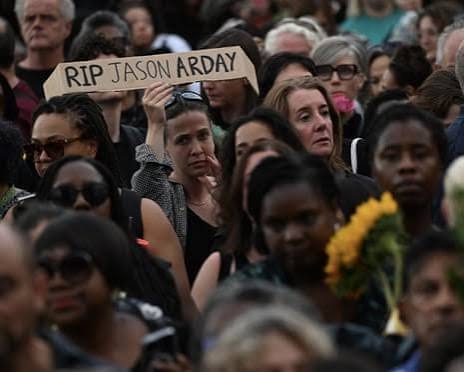
Thousands of mourners gathered in central London to honour Jason Arday, the trailblazing Cambridge academic whose death has ignited a fierce debate over racism, media scrutiny and institutional responsibility.
Trafalgar Square fell silent as candles were lit and placards raised bearing Arday’s image and messages such as “Stand against racist witch hunts” and “Justice for Jason.” The vigil, organised by campaign group Stand Up To Racism, drew students, academics, anti-racism activists and members of the public, many of whom had never met Arday but said they felt compelled to stand in solidarity with his family.
Arday, a professor of sociology of education and one of Cambridge’s youngest Black professors, had resigned from his post after facing a storm of plagiarism allegations and questions over aspects of his academic record. In a public resignation letter, he wrote that he had “reached the limits of what any person should reasonably be expected to endure.” The cause of his death has not been made public.
At the vigil, speakers described Arday as a gifted scholar and a generous mentor who dedicated his work to racial justice and widening access to higher education. Former students spoke of a teacher who stayed late to support those from disadvantaged backgrounds and who used his own story of overcoming adversity to inspire others.
Cambridge’s leadership is under mounting pressure over its handling of the allegations and its duty of care. The university’s chancellor, Chris Smith, has condemned what he called a “racist feeding frenzy” surrounding the case, insisting that while academic misconduct claims must be rigorously examined, institutions and the media must refuse to fuel racially charged pile-ons.
Prime Minister Andy Burnham, himself a Cambridge graduate, has described Arday’s death as “a tragedy on so many levels.” A petition demanding a public inquiry into media coverage of the case has attracted tens of thousands of signatures, backed by prominent politicians and campaigners. It alleges that relentless press attention and online abuse created an intolerable environment for Arday.
Support for his family has surged, with a fundraising campaign collecting hundreds of thousands of pounds. Former students have launched an online project, “Everything Good About Jason Arday,” inviting tributes to counter what they call a “single reductionist narrative” about a man many remembered simply as “the kindest person we knew.”