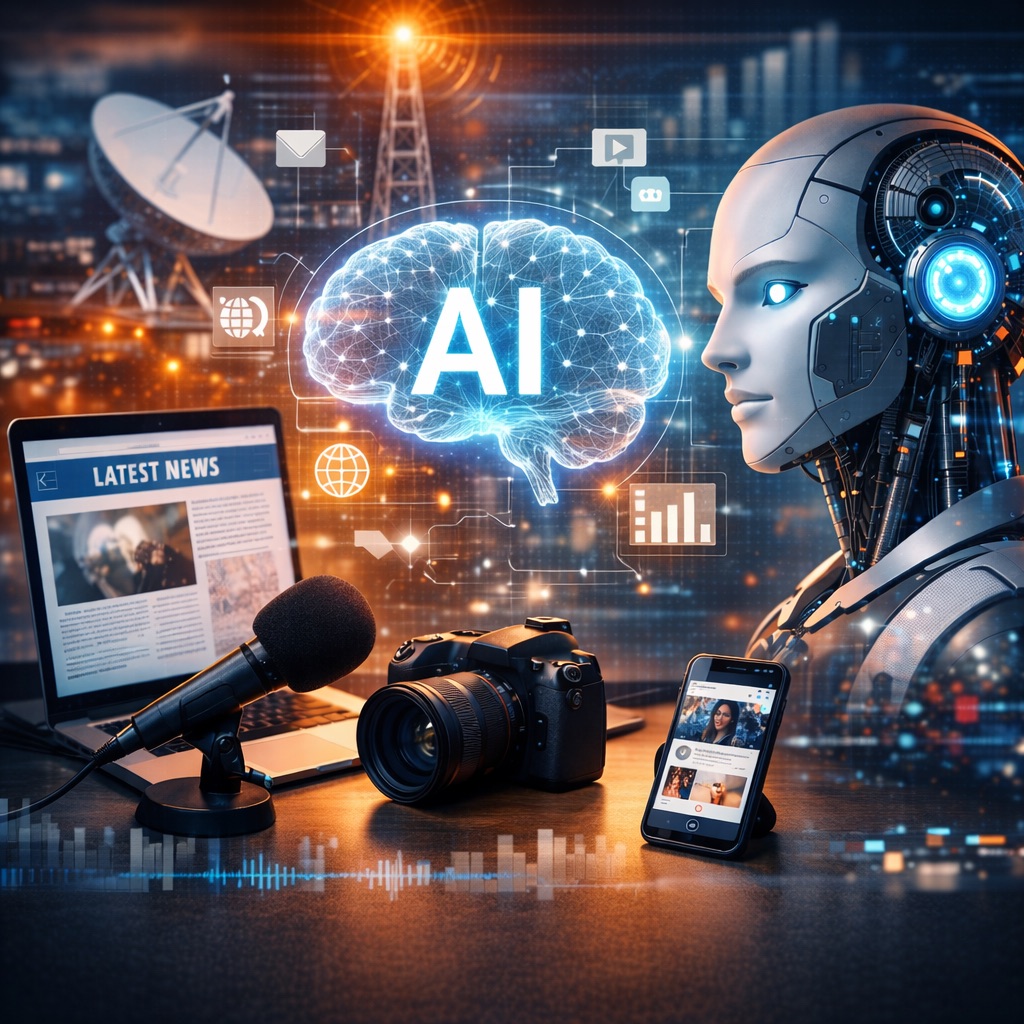
Artificial Intelligence (AI) is one of the most significant developments in modern science and technology. It refers to computer systems designed to perform tasks that usually require human intelligence, such as learning from data, recognizing patterns, and making decisions. Today, AI is gradually transforming the field of mass communication.
In journalism, AI is helping media organizations gather and analyze information faster than before. Some news agencies now use AI tools to generate simple reports such as weather updates, sports results, and financial news. This allows journalists to spend more time focusing on investigative reporting and storytelling that requires human creativity and critical thinking.
AI is also changing the way audiences consume media. Social media platforms and news websites use algorithms to recommend content based on users’ interests and online behavior. This means people often receive news, videos, and advertisements that are tailored to their preferences. As a result, communication has become more personalized and interactive.
In broadcasting and digital media production, AI can assist with video editing, automatic subtitles, and speech-to-text technology. These tools help media content reach wider audiences, including people who speak different languages or have hearing difficulties.
However, the growing use of AI also raises concerns. Technologies like deepfakes and automated content can spread misinformation if they are not carefully monitored. Because of this, media professionals must use AI responsibly and maintain strong ethical standards.
Overall, Artificial Intelligence is reshaping how information is produced, shared, and consumed in modern society.