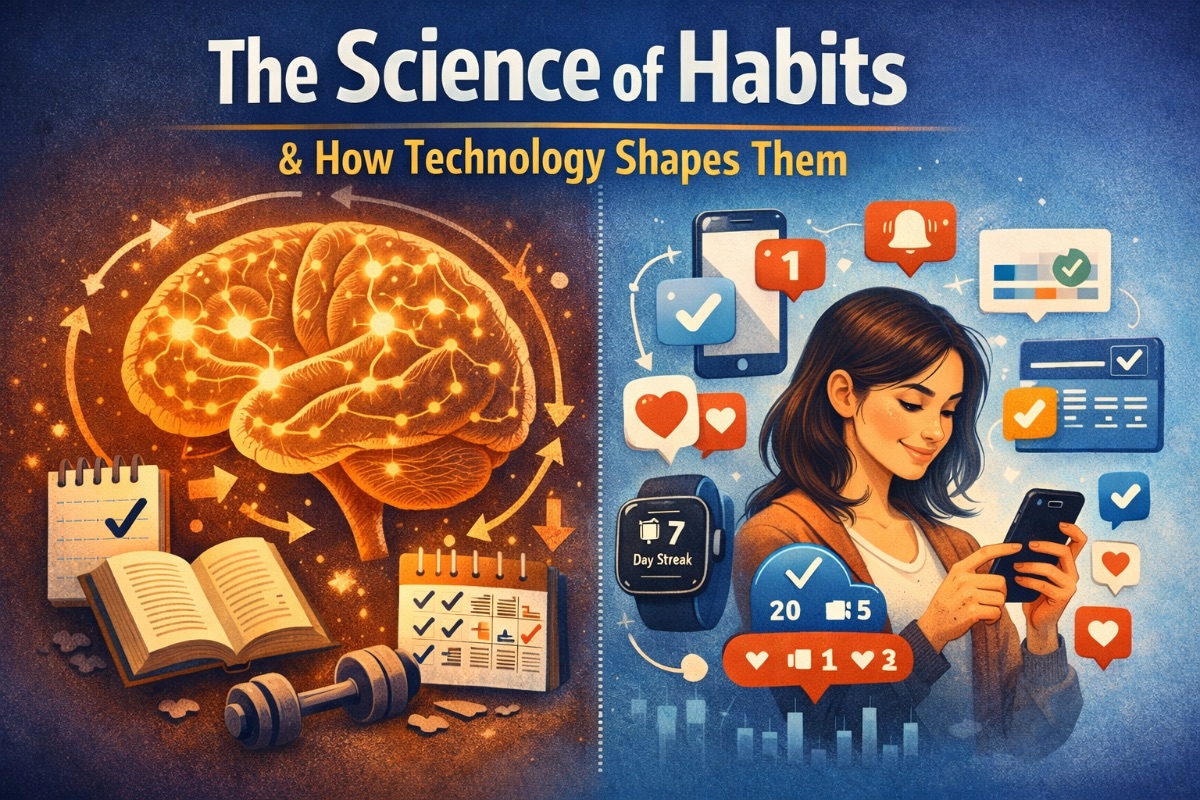
Your alarm goes off in the morning and before you even get out of bed, you reach for your phone. What starts as a quick check of the time quickly turns into scrolling through notifications, replying to a message, or checking social media. Before you realize it, ten minutes have already passed. Later in the day while trying to focus on school work, your phone buzzes again and almost automatically you pick it up to see what the notification is about. Sometimes it is something important, but many times it is not. Still, the urge to check it is hard to ignore.
Experiences like this are very common today. Technology has become part of everyday life and it quietly shapes many of the habits people develop. What often feels like a simple choice can actually be the result of a habit that has formed over time.
Science shows that habits develop when actions are repeated regularly and the brain begins to perform them almost automatically. When a behaviour is followed by a reward, the brain releases a chemical called dopamine which creates a feeling of satisfaction. This encourages the brain to repeat the same behaviour again. After a while the action becomes a habit that people perform without thinking much about it.
Many digital platforms are designed with this understanding of human behaviour. Features like notifications, likes, comments and reminders act as small rewards that encourage people to keep coming back. A clear example can be seen on Instagram. When someone posts a picture, the app sends notifications whenever another user likes or comments on the post. Each notification creates curiosity and encourages the person to open the app again. Over time, people may find themselves checking the app repeatedly just to see if there are new likes or reactions. What began as occasional use can slowly become a daily habit.
However, technology does not only create distracting habits. It can also help people build positive routines. Some apps are designed to help users track habits, manage their time and stay consistent with their goals. Fitness apps remind people to exercise, while productivity tools help students stay focused when studying.
Understanding how habits work makes it easier to see how technology influences daily behaviour. While digital platforms can sometimes encourage distraction, they can also be useful tools when used intentionally. Being aware of how these systems affect our routines can help people make better decisions about how they use technology in their everyday lives.