Photo Credit- @educationsupplyfranchise_expo(on instagram)
By Oni Idunnu/ 300-level Mass Communication UNILAG.
HOW TECHNOLOGY QUIETLY CHANGED THE WAY WE LEARN (AND REMEMBER).
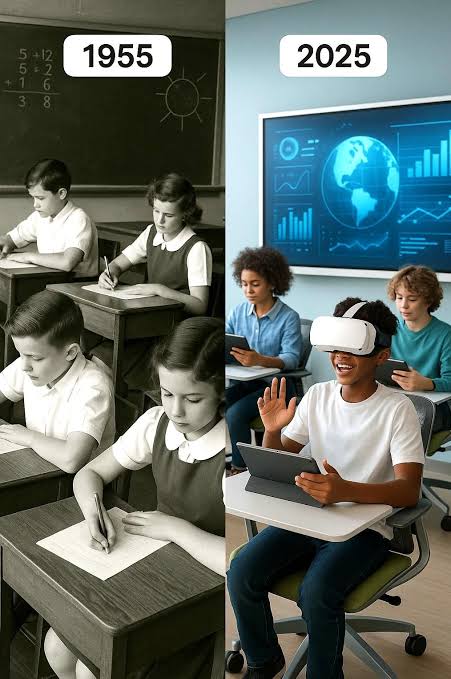
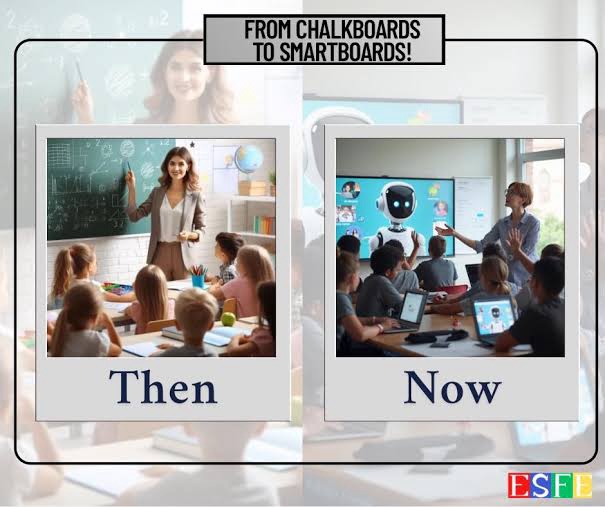
Learning was once limited by locations, time and physical materials. Knowledge is mainly found in classrooms, textbooks, and handwritten notes. Lack of lectures or misplaced notebooks frequently resulted in a permanent loss of access to knowledge. Education is largely dependent on memory and physical presence (Siemens, 2005). Learning is now more flexible and digitally mediated than it was in the past due to advancements in science and technology, particularly digital technology.
Online platforms, digital libraries and learning management systems now allow students to access academic materials at any time and anywhere. According to Bates (2019), technology has transformed education from a rigid system to a system that supports self-paced and life-long learning. Technology has also changed the storage and review of knowledge. Students can record lectures, store notes in cloud storage, and use e-mails, forums, and collaborative tools to continue academic discussions beyond classrooms. This is consistent with Vigotsky's idea that learning is a social process that is expanded through digital interaction (Vigotsky, 1978). However, this abundance of information has brought new responsibility: documentation and reflection.
Learning materials are easy to preserve, and students are expected not only to consume knowledge, but also to organize and present their intellectual growth. Here, the writing portfolio becomes essential. The portfolios allow students to collect assignments, blog posts, reflections and research work over time, providing evidence of progress in learning, rather than isolated performance (Barrett, 2007). In the academic context, portfolios serve both educational and evaluation purposes. They demonstrate critical thinking, consistency, creativity, and engagement with subjects. From a technological standpoint, digital portfolios also encourage media literacy and responsible knowledge management (Cambridge, 2010).
Ultimately, technology has not replaced human learning; it has enhanced its memory and continuity. Through digital tools and portfolios, learning becomes a documented journey rather than a fleeting experience. Science and technology, therefore, do not distance us from education — they deepen our relationship with it by allowing us to remember how we learned, not just what we learned.
References
Bates, T. (2019). Teaching in a Digital Age: Guidelines for Designing Teaching and Learning. BCcampus.
Barrett, H. (2007). Researching Electronic Portfolios and Learner Engagement. The REFLECT Initiative.
Cambridge, D. (2010). E-portfolios for Lifelong Learning and Assessment. Jossey-Bass.
Siemens, G. (2005). Connectivism: A Learning Theory for the Digital Age. International Journal of Instructional Technology and Distance Learning.
Vygotsky, L. S. (1978). Mind in Society: The Development of Higher Psychological Processes. Harvard University Press.