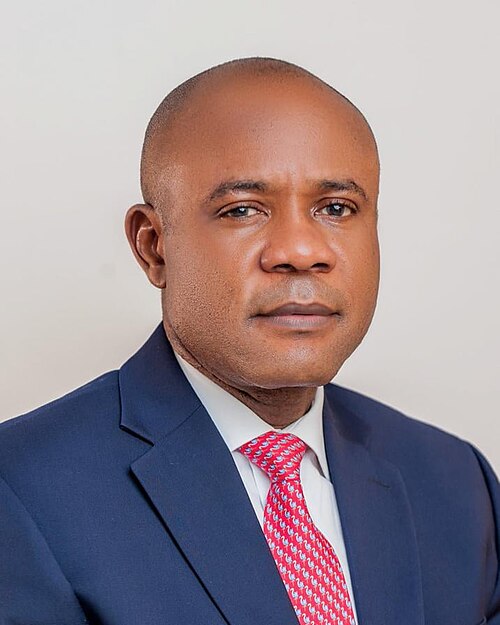
Governor Peter Mbah of Enugu State has declared that the state received a whopping N230 billion from the Federation Account Allocation Committee (FAAC) in 2025. This figure dramatically eclipses the initial budget projection of N150 billion, raising eyebrows during his 2026 budget presentation to the State Assembly in Enugu.
Mbah touted the 2025 budget's performance as "impressive," boasting a total of N971 billion approved,a staggering figure that seems more like a campaign ploy than an actual fiscal achievement. “The FAAC inflow not only met our expectations but exceeded them by more than half,” he claimed, conveniently glossing over the complexities of budgetary realities.
He attributed this so-called financial success to bold economic reforms spearheaded by President Bola Tinubu, including the controversial removal of fuel subsidies and the unification of foreign exchange rates. Mbah's narrative suggests that these measures have somehow miraculously improved key macroeconomic indicators, though many remain skeptical about their long-term effectiveness.
Mbah added, “Today, we can observe that inflation has declined and continues to trend downward; interest rates have eased, and our foreign reserves have recently surpassed the N46 billion mark.” However, one has to wonder if this is genuine economic progress or just another political façade.
In terms of the state's own revenue generation, Mbah is projecting an eye-popping N400 billion in Internally Generated Revenue (IGR) by year-end, claiming this represents a historic high for Enugu State. But such sensational claims leave room for doubt, especially given that this projection is a staggering 221 percent increase over 2024's IGR.
“By the end of the fourth quarter of 2025, we would have mobilised a total revenue of N826 billion,” he boasted, but the numbers may not tell the whole story. While he provided a breakdown of revenue performance, it feels more like an attempt to justify a lack of transparency rather than communicate genuine fiscal health.
When it comes to expenditures, Mbah reports that N138 billion was allocated for salaries and essential services, which he claims accounts for nearly all planned recurrent spending for 2025. He also announced a substantial investment of N667 billion in capital projects, but again, one has to wonder,are these projects genuinely underway, or are they simply another smoke-and-mirrors tactic?
“We have delivered about 83 percent of the overall budget,” Mbah asserted, yet this assertion raises questions about accountability and the actual completion of these projects. “November and December are expected to be peak months for these projects,” he added, hinting at last-minute efforts to meet expectations.
Looking forward, Mbah presented an ambitious appropriation bill of N1.62 trillion for the 2026 fiscal year, signaling a continued commitment to his vision for the state. But is this commitment sincere, or just another political maneuver to keep the momentum going?
As Enugu State navigates its financial landscape, Mbah’s announcements seem more like a performance aimed at impressing voters than a genuine reflection of economic stability. With a blend of bold claims and questionable credibility, one has to wonder whether Enugu’s financial future is as bright as the governor would have us believe.