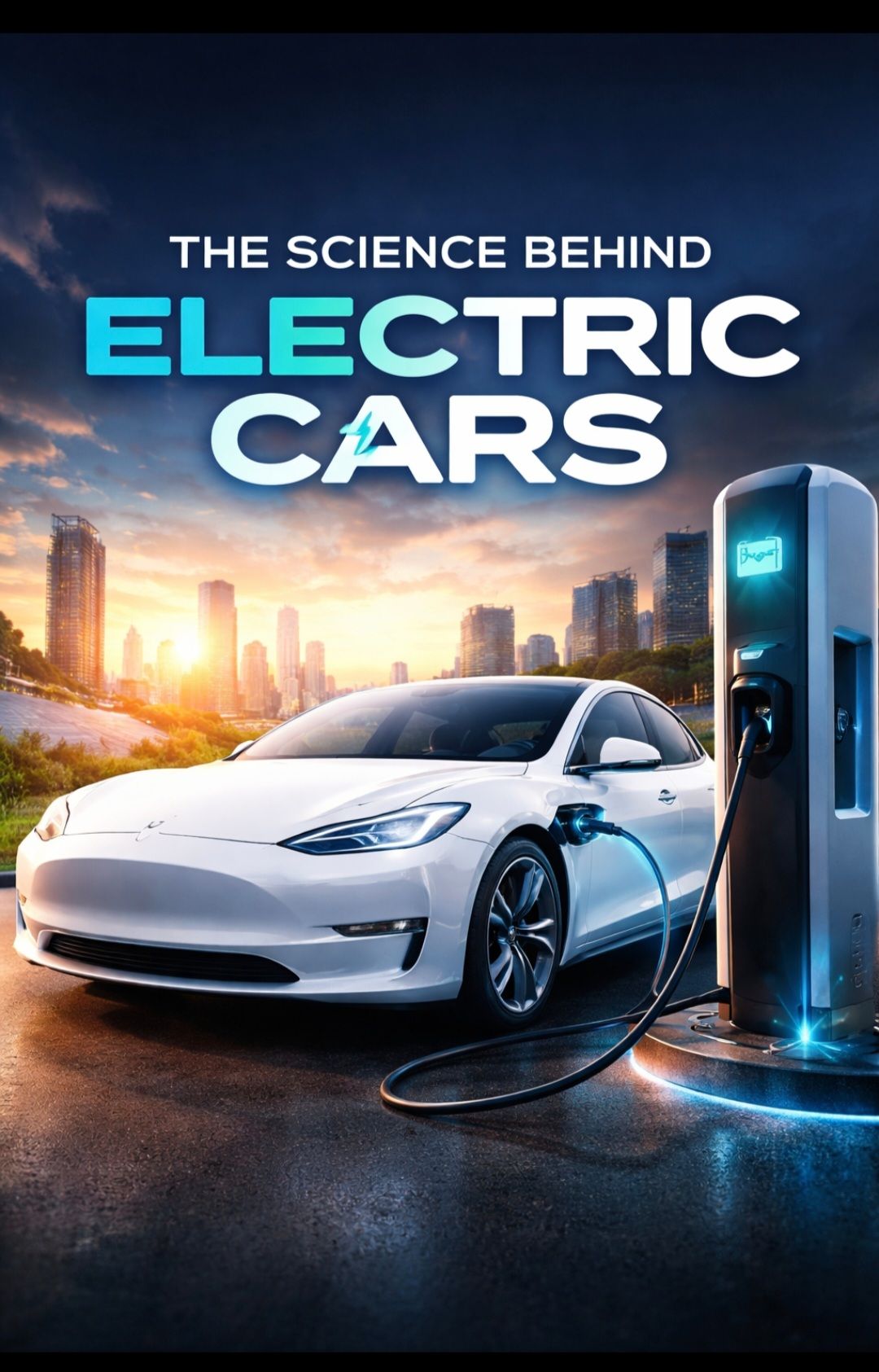
The Science Behind Electric Cars
Electric cars are becoming an important part of modern transportation. Unlike traditional vehicles that run on petrol or diesel, electric cars operate using electricity stored in rechargeable batteries. This technology is gaining global attention because it offers a cleaner and more efficient way of powering vehicles.
At the center of every electric car is the battery system. Most electric vehicles use lithium-ion batteries, similar to those found in smartphones and laptops but much larger and more powerful. These batteries store electrical energy through chemical reactions. When the car is turned on, the stored energy is released as electricity and sent to the vehicle’s motor.
The electric motor is responsible for moving the car. Instead of burning fuel like conventional engines, the motor converts electrical energy into mechanical energy using electromagnetic forces. When electricity flows through the motor’s coils, it creates a magnetic field that causes parts of the motor to rotate. This rotation turns the wheels and moves the vehicle forward. Electric motors are highly efficient and convert most of the energy they receive into motion.
Electric cars must be recharged regularly to restore the energy stored in their batteries. Charging can be done at home through standard electrical outlets or at public charging stations. Some advanced charging systems, known as fast chargers, can recharge a large portion of the battery within a short time.
Another important feature of electric vehicles is regenerative braking. When the driver slows down or presses the brake, the motor briefly works as a generator, converting the car’s motion back into electricity and storing it in the battery. This improves efficiency and extends the driving range.
Overall, the science behind electric cars combines principles from physics, chemistry, and engineering. As technology continues to improve, electric vehicles are expected to play a major role in the future of sustainable transportation.