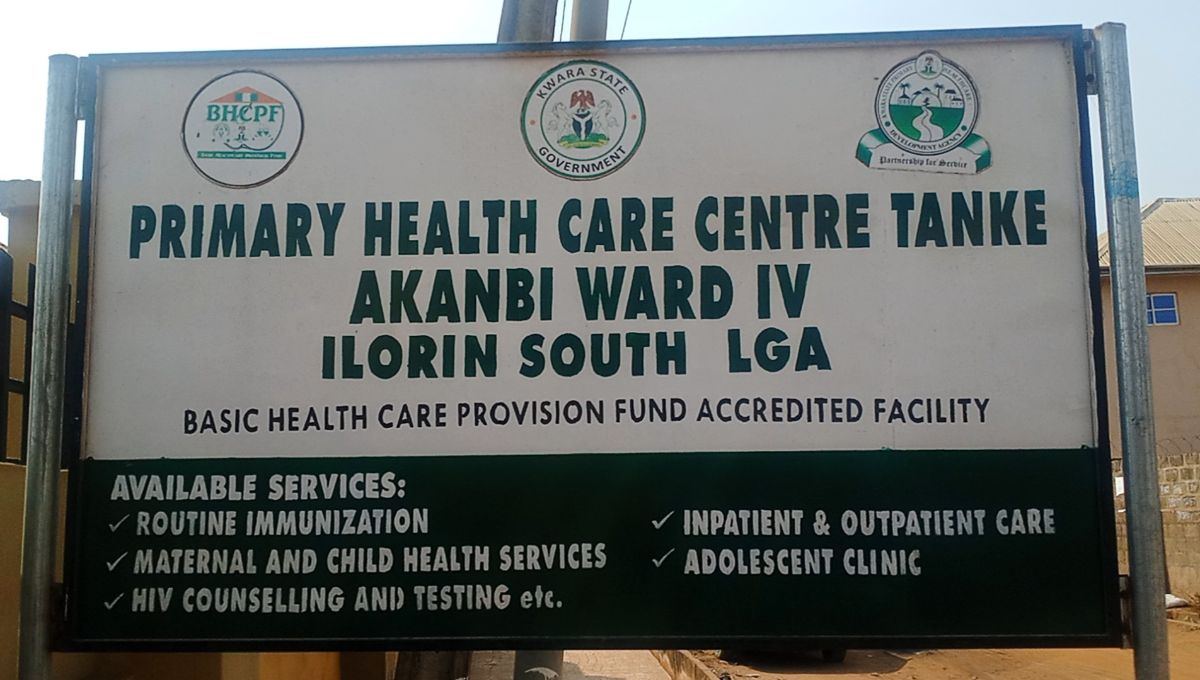
In the heart of our community’s Primary Health Care (PHC) centers, a quiet revolution in maternal health is taking place. Through government-backed subsidy schemes, the financial burden of childbirth, once a daunting mountain for many families is being systematically dismantled. However, as the government continues its commendable work in providing "free" healthcare, an investigative look into the patient experience suggests that there is an opportunity to turn a "good" policy into a "perfect" one by closing the final gaps in out-of-pocket spending.
The government’s commitment to maternal health is visible the moment a patient enters the facility. For many, the experience is a "pleasant surprise." Mr. Jimoh Lukman Olalekan, a father of three who recently transitioned from using civil service hospitals to a local PHC, is a testament to this success.
"The first day we came around, we were told it is subsidized," Mr. Olalekan shared. “We were given the hospital card without paying and also provided with some medicine without paying a dime.”
This experience highlights the government’s achievement in removing the primary "entry barrier" to healthcare. By eliminating the cost of registration and initial medication, the government has ensured that no family is afraid to walk through the hospital doors. This is a significant victory for public health policy, fostering an environment where patients feel welcomed rather than billed.
Despite these successes, the investigation revealed that the financial journey of an expectant mother is not yet entirely cost-free. While the "consultation" is free, the "consumables" and "diagnostics" still carry a price tag that can strain a household budget.
Mrs. Abdullah, a regular patient at the center, noted that while she received free drugs, she recently paid ₦10,000 for laboratory tests a sharp increase from prices seen in previous years. Because these payments are often made in cash to lab attendants, there is a lack of price standardization that can confuse patients.
Furthermore, the "Maternity Bag" remains a significant out-of-pocket expense. Patients are typically given a list of items pads, methylated spirit, and other delivery essentials to purchase from private pharmacies before their due date. Mrs. Sholarin, an expectant mother, noted that while she hasn't been asked to buy items like syringes yet, the "maternity bag" list is an expected norm.
Government can improve this subsidy scheme by expanding the current subsidy to cover standardized laboratory tests and providing a "Basic Delivery Kit" (containing the items currently on the maternity bag list), the government could effectively eliminate the last remaining financial hurdles. This would ensure that "free" means "zero-cost" from registration to recovery.
One of the most vital findings of this investigation is the "Information Gap." While the government is doing good work, many citizens are unaware of the extent of their entitlements.
Mrs. Abdullah admitted that no one officially explained the hospital’s free policy to her. On the other hand, Mr. Olalekan only discovered the benefits after arriving. This suggests that the government has a "hidden gem" of a service that needs louder, more active broadcasting.
By launching a robust public awareness campaign using radio, community town halls, and posters within the clinics the government can ensure that every pregnant woman knows she is entitled to subsidized care. Clear communication prevents the "normalization of payment" and protects citizens from any informal fees that might arise due to a lack of information.
Perhaps the most heartening discovery of this investigation is the high level of trust and professional ethics among the healthcare workers. All three respondents Mrs. Abdullah, Mrs. Sholarin, and Mr. Olalekan reported that they were treated with dignity and respect, regardless of their payment status.
"The subsidy did not in any way affect how the patient was treated," Mr. Olalekan remarked, praising the matrons and attendants for their lack of “harshness.”
This professional dedication provides the perfect foundation for the government to build upon. The staff are doing their part with a positive attitude; now, the system can support them further by streamlining laboratory payments and providing the necessary supplies that patients currently buy elsewhere.
The government’s current subsidy scheme is a vital lifeline. It has opened doors for fathers like Mr. Olalekan and provided essential care for mothers like Mrs. Abdullah and Mrs. Sholarin. To reach the next level of excellence, the path forward is clear:
• Extend Coverage: Incorporate laboratory fees and "maternity bag" essentials into the government-funded package.
• Standardize and Digitize: Move laboratory payments away from cash to ensure transparency and protect the subsidy’s integrity.
• Active Communication: Use every available channel to tell the public exactly what is free, ensuring that every citizen can access their benefits with confidence.
By covering these final "uncovered" costs, the government will not just be providing a service; it will be guaranteeing a future where no life is lost because of a lack of funds for a lab test or a maternity bag. The foundation is solid it is now time to finish the house.