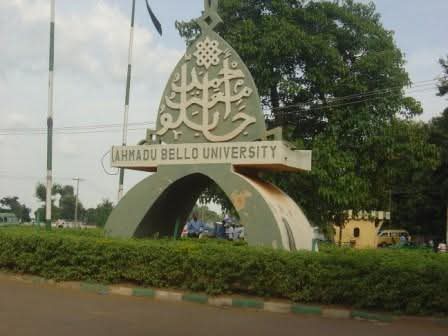
Ahmadu Bello University, Zaria, has secured provisional hosting rights for the 29th Nigerian University Games, setting the stage for the return of the country’s premier collegiate sports festival to one of its most storied campuses.
The decision by the Nigerian University Games Association, NUGA, marks a symbolic homecoming for the institution. ABU last hosted the Games in 2001, at a time when university sports were a dominant pipeline for national teams and a major rallying point for young people across Nigeria.
The provisional award of hosting rights was communicated in a formal letter to the Vice-Chancellor of ABU, Professor Adamu Ahmed, by the Acting Secretary-General of NUGA, Yunusa M. Bazza, following the approval of the association’s council. The letter confirmed that ABU had met the initial criteria to stage the 2028 edition and invited the university to begin preparations in earnest.
According to the correspondence, the hosting rights are subject to the signing of a Memorandum of Agreement between the university and NUGA. The agreement will spell out responsibilities for infrastructure, logistics, security, medical services, accommodation, transportation and media operations. The NUGA Council is expected to announce the exact dates of the Games after both parties conclude the formalities.
The letter also authorised ABU to open discussions with relevant government agencies and non-governmental organisations to build partnerships that will support the successful delivery of the event. This includes potential collaborations with federal and state sports commissions, corporate sponsors, development partners and alumni networks. The university has also been encouraged to commence upgrades of its sports and related facilities ahead of the Games.
Receiving the letter, Professor Ahmed described the development as a major boost to the university’s sporting profile and a vote of confidence in its capacity to host large-scale national events. He said the hosting rights align with Nigeria’s broader policy of developing the next generation of athletes through the university system, rather than relying solely on ad hoc talent discovery.
He noted that the NUGA Games have historically served as a launchpad for some of the country’s most accomplished athletes, many of whom went on to represent Nigeria at the All Africa Games, Commonwealth Games, World Championships and the Olympics. By bringing the Games back to Zaria, he argued, ABU is positioning itself once again at the heart of that talent pipeline.
“This opportunity fits squarely into Nigeria’s broader agenda of nurturing athletes from the grassroots,” the Vice-Chancellor said, adding that the university intends to use the event to deepen its contribution to national sports development.
Professor Ahmed emphasised that the Games would not be treated as a mere recreational festival. Instead, ABU plans to frame the event as a strategic platform for national unity, youth engagement and economic activity. He pointed out that sports have evolved into a multi-billion-dollar global industry, with value chains that cut across infrastructure, media, tourism, merchandising, technology and data analytics.
“It is an added opportunity to build Nigeria’s economy around the sports value chain,” he said, stressing that the university understands the expectations of the Federal Government regarding the sports industry’s role in job creation and economic diversification.
The Vice-Chancellor also highlighted the timing of the award, noting that ABU has recently been designated as one of Nigeria’s sports centres of excellence. That status, he said, comes with a responsibility to set standards in coaching, sports science, athlete welfare and facility management. Hosting NUGA in 2028, in his view, will test and showcase the university’s capacity in all these areas.
ABU’s sporting tradition is long and distinguished. Over the decades, the university has produced notable athletes, coaches and sports administrators who have shaped Nigerian sports in athletics, football, basketball, volleyball and other disciplines. Its facilities, including a main stadium, training pitches, indoor sports halls and hostels, have historically served both students and elite athletes in the region.
However, like many public institutions, ABU’s infrastructure has faced pressure from years of heavy use and limited funding. The prospect of hosting NUGA is expected to trigger a wave of rehabilitation and new construction. University officials have hinted at plans to refurbish tracks, upgrade playing surfaces, improve lighting, expand seating, modernise changing rooms and enhance medical and anti-doping facilities.
Beyond the campus, the Games are likely to have a significant impact on Zaria and Kaduna State. Thousands of student-athletes, coaches, officials, journalists and spectators are expected to converge on the city during the competition. Local businesses in hospitality, transport, food services and retail are projected to benefit from the influx, while the event will also place Zaria in the national spotlight.