The Silent Sentry: The Doldrums of Examination Invigilation
by Amina Ahmad Aminu.
Among the varied and demanding responsibilities of a lecturer lies a task that is perhaps the most universally dreaded and tediously mind-numbing: examination invigilation. Apart from the preparation of engaging lectures, the crafting of challenging coursework, the endless cycle of marking and grading, and the pursuit of research, examination invigilation is ostensibly a critical function necessary for maintaining academic integrity and excellence. However, the act of invigilating is, for the lecturer, a prolonged exercise in passive vigilance, a silent sentinel duty that taxes tolerance and stifles intellectual energy.
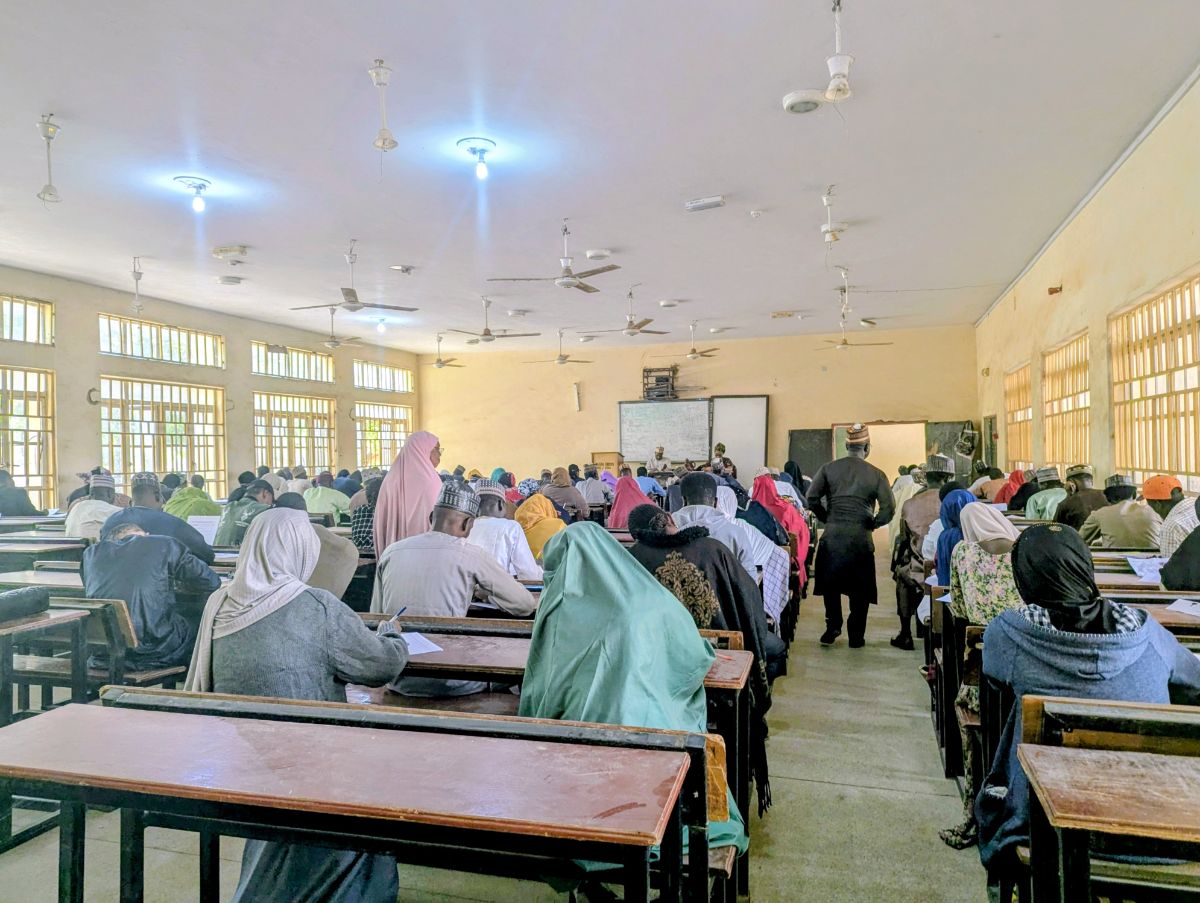
The ennui begins long before the first pen touches the paper, with the logistical dance of setting up the examination hall. Desks must be spaced, students must be checked against seating plans, and the solemn stack of question papers, attendance slips and booklets must be distributed; a meticulous routine that, while crucial, feels like a bureaucratic overture to an inevitable marathon of stillness. This initial activity is the only dynamism in a process otherwise defined by stasis.
Once the examination commences, the lecturer's role undergoes a profound, and wearying, transformation. The lecturer becomes a peripheral observer, a figure gliding quietly along aisles, whose primary interaction with the environment is the subtle squeak of their shoes on the polished floor. The hours out, an interminable succession of minutes marked only by the rustling of paper, the occasional nervous cough, and the slow, hourly heavy tick of the Kashim Ibrahim Library wall clock at ABU. This responsibility carries a low but persistent level of stress, because a single mismatch between the attendance and the scripts can compromise the integrity of the entire assessment, leading to administrative complications, and potential disciplinary hearings. Furthermore, the invigilator is the sole guarantor of fairness in the examination room; a lapse in their concentration as minute as a moment of allowing their gaze to drift, could be the juncture a student gains an unfair advantage. This pressure to be infallibly attentive is what truly makes the experience so taxing.
The mental exhaustion of invigilation is a unique kind of fatigue which is not the burnout of deep cognitive work, but the drain of enforced alertness in the absence of stimulation. As an invigilator, you must maintain an eagle eye, scanning hundreds of heads for the tell-tale signs of academic misconduct: the furtive glance at a sleeve, the suspicious movement toward a pocket, the subtly placed notes, the flip of the question paper, and the passage of the attendance sheet, must all be carefully examined. For the majority of the time, the vigilance is exercised against a backdrop of complete, and entirely honest concentration because incidents of exam malpractice are always limited. Nonetheless, this low-probability coupled with high-consequence vigilance means the mind cannot relax into any meaningful task; it is perpetually on a low-grade alarm, ready to spring into action for an event that is unlikely to occur.
In essence, examination invigilation is a perfect storm of professional duty and personal tedium. It is a necessary administrative evil that demands the highest levels of passive discipline from the lecturer while simultaneously stripping them of their active, scholarly identity. It is a few hours spent as the "silent sentry," a responsibility that, while vital to the probity of the academic system, is arguably one of the most mind-numbing and tedious task on the demanding calendar of a university lecturer.
7