Introduction
Energy is one of the most important resources in modern society. It powers our homes, schools, hospitals, industries, and transportation systems. For many decades, the world has relied mainly on fossil fuels such as coal, oil, and natural gas to generate electricity and run machines. However, these traditional energy sources come with serious problems. They are limited in supply and produce harmful gases that contribute to environmental pollution and climate change.
What is Renewable Energy?
Renewable energy refers to energy obtained from natural sources that can be replenished continuously and will not run out over time. Unlike fossil fuels, which take millions of years to form and release harmful pollutants when burned, renewable energy sources are cleaner and more environmentally friendly.
Types of Renewable Energy
1. Solar Energy
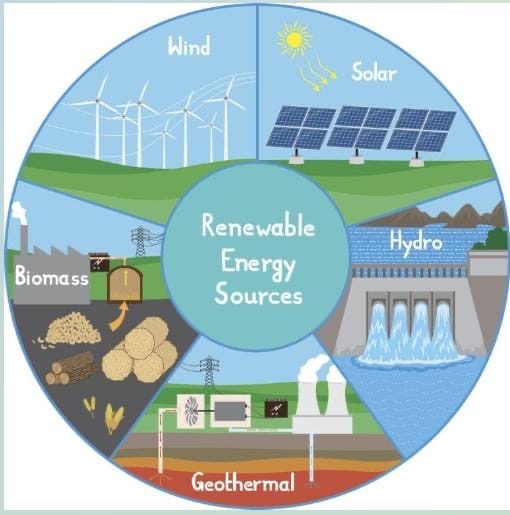
Solar energy is one of the most widely used forms of renewable energy. It comes from the sun and is captured using devices called solar panels. These panels contain photovoltaic cells that convert sunlight directly into electricity.
One major advantage of solar energy is that the sun is an unlimited source of power. As long as the sun shines, solar energy can be produced. It is also clean and does not produce harmful gases that pollute the air.
2 . Wind Energy
Wind energy is produced by using wind turbines. These turbines have large blades that spin when wind blows against them. The spinning motion turns a generator, which then produces electricity.
3. Hydropower
Hydropower, also known as hydroelectric power is generated from moving water. It is one of the oldest and most widely used renewable energy sources.
4. Geothermal Energy
Geothermal energy comes from heat stored beneath the Earth's surface. The Earth’s interior contains enormous amounts of heat that can be used to
Benefits of Renewable Energy
1. It helps reduce environmental pollution. Unlike fossil fuels, renewable energy sources produce little or no greenhouse gases, which helps slow down climate change.
2. Renewable energy is sustainable. Resources such as sunlight, wind, and water are naturally replenished and will not run out. This means future generations will still be able to use them.
3.Renewable energy can create jobs and boost economic growth
Challenges of Renewable Energy
One of the main challenges is the high initial cost of installing renewable energy technologies such as solar panels and wind turbines. Although operating costs are low, the installation cost can be expensive.
Another challenge is that some renewable energy sources depend on weather conditions. Solar panels require sunlight, and wind turbines need wind to operate. This means energy production can sometimes be inconsistent.
As the world continues to search for solutions to climate change and energy shortages, renewable energy will play a crucial role in shaping the future of power. By adopting renewable energy technologies today, societies can ensure a cleaner, safer, and more sustainable future for generations to come.
Question for Readers:
Do you think renewable energy will completely replace fossil fuels in the future?