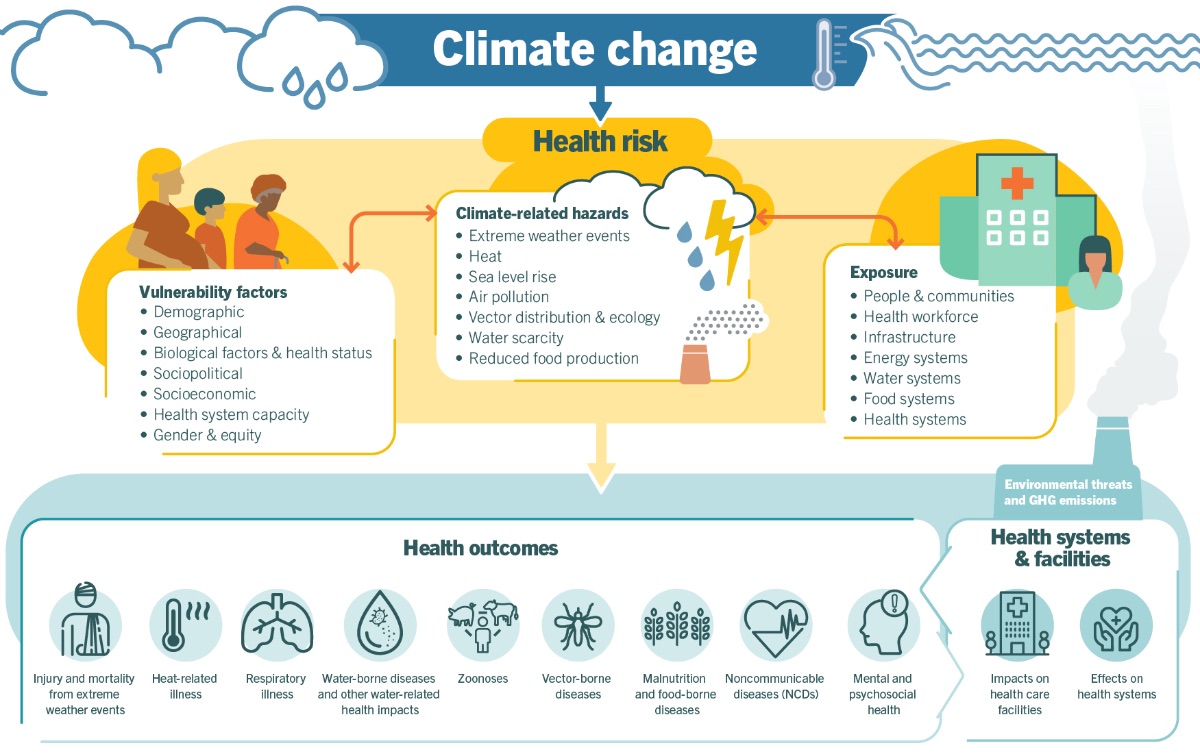
Scientists and health experts around the world have continued to warn about the effects of rising global temperatures on human health. In recent years, many countries have experienced unusually high temperatures and longer heat waves, raising concerns about the possible health risks associated with extreme heat.
According to health researchers, excessive heat can lead to several medical conditions such as dehydration, heat exhaustion, and heat stroke. These conditions occur when the body is unable to regulate its temperature properly due to prolonged exposure to high heat. Vulnerable groups such as children, elderly people, and individuals who work outdoors are particularly at risk.
Climate scientists attribute the increase in global temperatures largely to the effects of climate change. Organizations such as the World Health Organization have repeatedly warned that climate change could increase the frequency of extreme weather conditions, including heat waves. Studies also show that high temperatures can worsen existing health conditions such as respiratory and cardiovascular diseases.
In Nigeria, many residents have begun to notice hotter weather conditions in recent years, especially during the dry season. From my own observation, the intense heat experienced during certain periods in cities like Lagos can make daily activities uncomfortable and sometimes even exhausting. Situations like this highlight why health experts continue to emphasize the importance of public awareness about the effects of extreme heat.
Medical professionals advise people to take precautionary measures during very hot weather. These include drinking enough water, avoiding prolonged exposure to direct sunlight, wearing light clothing, and ensuring proper ventilation in homes and workplaces.
While individual safety measures are important, environmental experts also emphasize the need for long-term solutions such as reducing greenhouse gas emissions and promoting environmental protection. Addressing these issues, they argue, will be essential in reducing the impact of climate change on public health in the future.