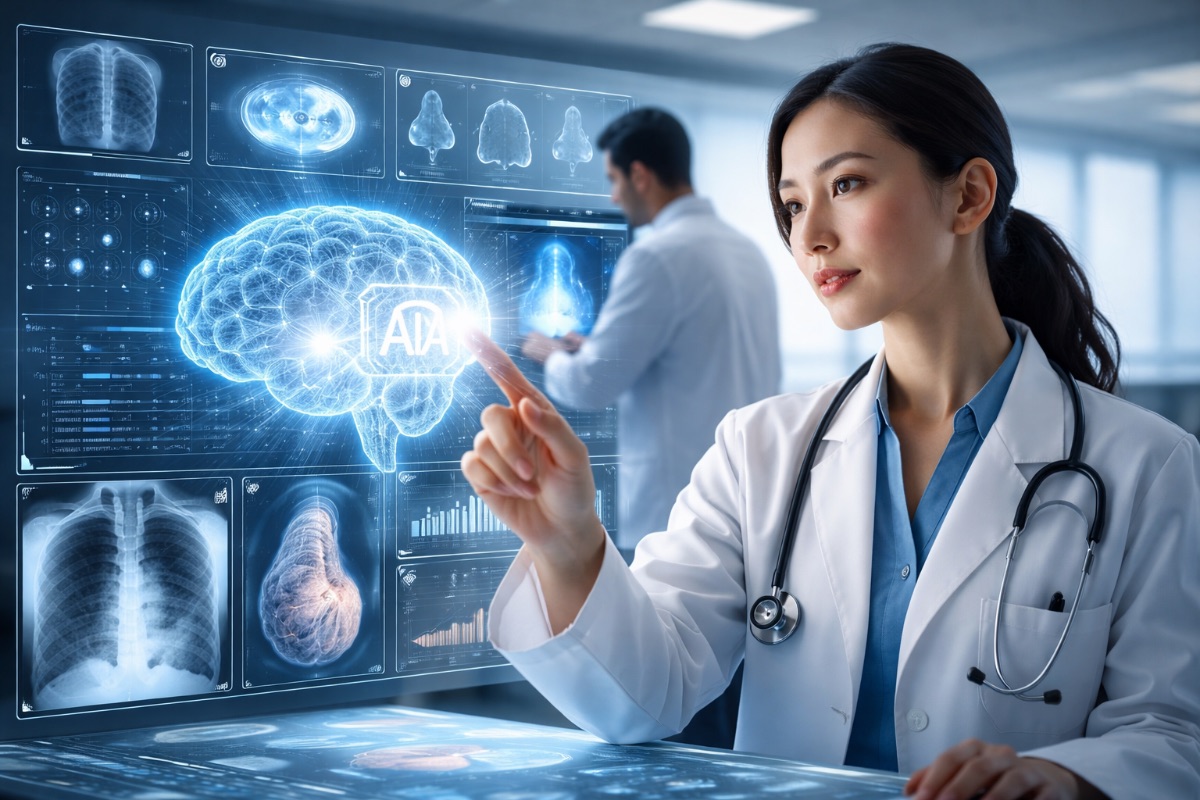
In recent years, the field of Artificial Intelligence has continued to transform industries around the world, and healthcare is now one of its most promising frontiers. Scientists and technology companies are increasingly using AI-powered systems to help doctors diagnose diseases faster and more accurately than ever before.
Researchers from Stanford University and Google Health have recently developed advanced AI models capable of analyzing medical images such as X-rays, CT scans, and MRIs with remarkable precision. These systems use a form of AI known as Deep Learning, which allows computers to learn patterns from massive datasets. By training the algorithms with thousands of medical images, the technology can identify signs of diseases that may sometimes be difficult for the human eye to detect.
One area where AI is making significant progress is in the detection of Breast Cancer. Early diagnosis plays a crucial role in increasing survival rates, and AI tools are helping radiologists identify tumors earlier than traditional methods in some cases. Studies show that AI-assisted screening can reduce diagnostic errors and improve the accuracy of mammogram readings.
Similarly, AI is also being used to detect conditions such as Diabetic Retinopathy, an eye disease caused by complications of diabetes. If left untreated, the condition can lead to blindness. AI-based screening tools can analyze retinal images and alert doctors to early signs of damage, allowing patients to receive treatment before the disease progresses.
Technology companies are investing heavily in these innovations. IBM has previously developed its AI system, Watson Health, designed to assist healthcare professionals in interpreting complex medical data. Meanwhile, companies like Microsoft and Amazon are also expanding their AI-driven healthcare research, focusing on improving data analysis, hospital management systems, and personalized treatment plans.
Experts believe that AI will not replace doctors but will instead serve as a powerful support tool. By handling complex data analysis and routine diagnostic tasks, AI systems allow medical professionals to focus more on patient care and decision-making. This collaboration between humans and machines could lead to faster diagnoses, more effective treatments, and better healthcare outcomes.
However, despite these advancements, challenges still remain. Concerns about patient privacy, data security, and the ethical use of AI in medicine continue to be widely debated. Healthcare regulators and policymakers are working to establish clear guidelines to ensure that these technologies are used responsibly.
As research continues, the integration of artificial intelligence into healthcare systems is expected to grow rapidly. Many experts predict that within the next decade, AI-powered diagnostic tools could become a standard part of hospitals and clinics around the world. If successfully implemented, these innovations could significantly improve global healthcare and save millions of lives.
The rise of AI in medicine highlights the powerful intersection between science and technology. As researchers continue to explore new possibilities, one thing is clear: the future of healthcare may increasingly depend on intelligent machines working alongside human expertise to deliver faster, safer, and more accurate medical care.