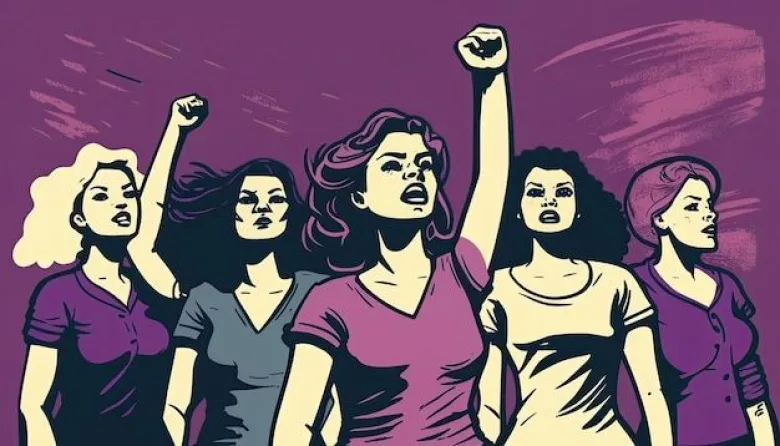
I still remember the day I realized that my voice mattered. Growing up in a traditional family in rural India, I was taught to be seen and not heard. My opinions were dismissed, my dreams belittled, and my aspirations ignored. But I refused to be silenced.
"My daughter, you must learn to be obedient and submissive," my mother would say. "That is the key to a happy marriage."
But I had other plans. I wanted to be a leader, not a follower. I wanted to make a difference, not just make dinner.
One day, I stumbled upon a group of women who were meeting in secret to discuss their rights. Led by a wise and courageous woman named Fatima, the group was determined to challenge the patriarchal norms that had held us back for so long.
"Sisters, we must stand together and demand our rights," Fatima would say. "We will no longer be silenced or oppressed."
As I joined the group, I was introduced to a diverse cast of characters, each with their own unique story and struggles. There was Leela, a young bride who had been forced into marriage at the age of 16.
"I was just a child when I got married," Leela would say. "I didn't know what I was getting into."
There was Zara, a talented artist who had been denied the opportunity to pursue her passion.
"My parents said that art was not a suitable career for a woman," Zara would say. "But I refused to give up on my dreams."
And there was Rukhsana, a widow who had been denied her rightful inheritance.
"My husband's family took everything from me," Rukhsana would say. "But I will not be defeated."
Together, we formed a powerful coalition, using our collective strength to challenge the injustices that had been perpetrated against us. We organized protests, petitions, and awareness campaigns, and we worked with local officials to change policies and laws that discriminated against women.
"We will not be silenced," we would chant. "We will not be oppressed."
My own life was transformed by the experience. I found a new sense of purpose and confidence, and I began to see myself as a leader.
"You are a true leader, Aisha," Fatima would say. "You have a voice that can inspire and empower others."
I also found love and support from the group, who became like a family to me.
"We are sisters in solidarity," Leela would say. "We will stand together forever."
But the journey was not without its challenges. We faced opposition from the village elders, who saw us as a threat to the traditional way of life.
"These women are troublemakers," one of the elders would say. "They must be stopped."
We also faced skepticism from some of the women themselves, who had been conditioned to believe that they were inferior.
"I don't know if I can do this," one of the women would say. "I'm just a woman."
But we refused to give up. We continued to fight for our rights, using every tool at our disposal to bring about change. And slowly but surely, the village began to transform.
The women's empowerment movement had a ripple effect, inspiring other villages and communities to take action. My story is a testament to the power of courage and determination, and a reminder that even the smallest actions can have a profound impact.
"We did it, sisters," Fatima would say. "We changed the world."