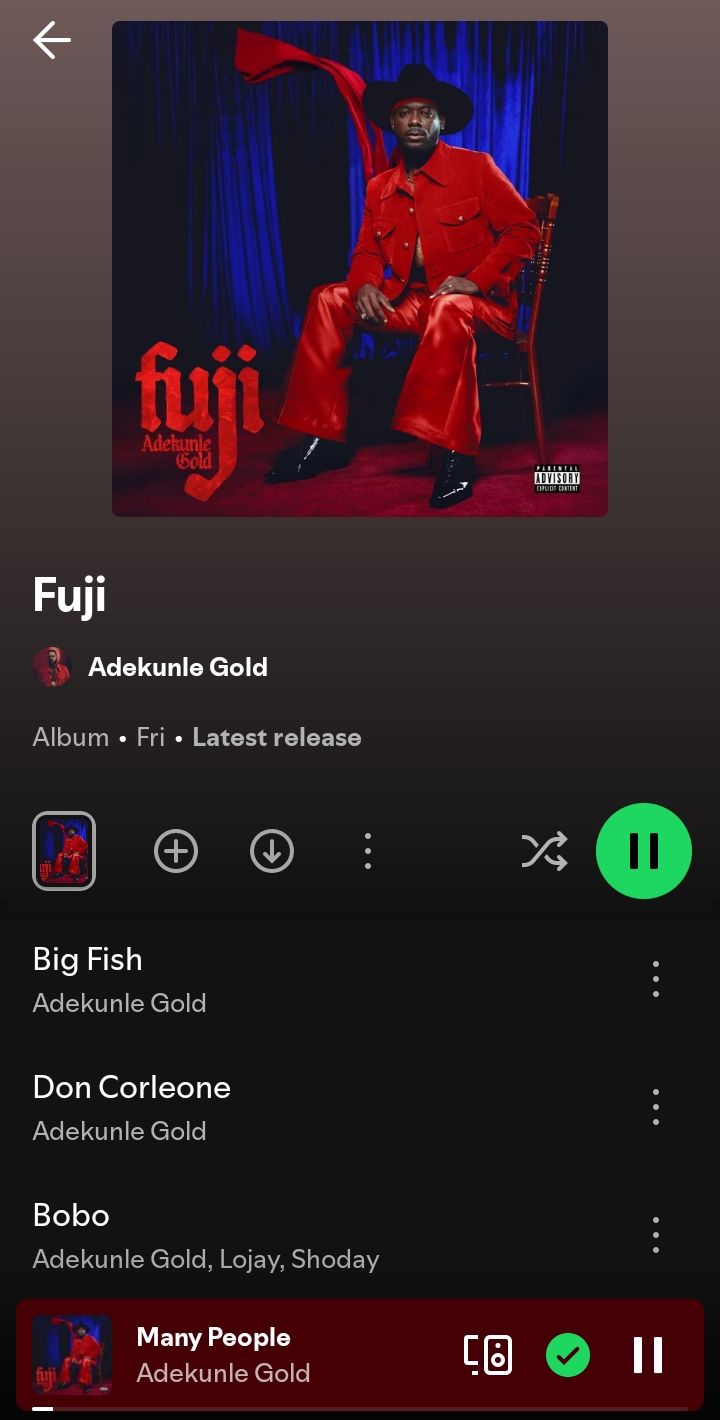
When Adekunle Gold announced his new album Fuji, many fans didnt quite know what to expect. The artist who started as the Orente creator known for his soft melodies and romantic storytelling was stepping into a genre deeply rooted in Yoruba heritage, one that once ruled Lagos streets before Afrobeats took the crown. But when the album dropped on October 3, 2025, it became clear that Fuji isnt just an album. It's a homecoming.In his own words,Adekunle Gold said the project began as an acronym: Finding Uncharted Journeys Inside. And that feels right. Fuji is more than a sound: itis a search for identity. For years, Adekunle Gold has danced between genres from highlife-inspired pop to Afrobeats and R&B. But this time, he returns to the roots that raised him. It is the sound of his father's radio, of Sunday morning chores, of neighbourhood parties where Alhaji Wasiu Ayinde and Pasuma were kings. But he does not just copy the old sound, he reinvents it. Fuji is a modern retelling of traditional music. You hear the talking drum, the Yoruba call-and-response and the layered percussion. Yet, tucked beneath those traditional elements are lush harmonies, global pop influences and sleek production that feels right at home on international playlists. The album flows like a story. Songs like Believe and Coco Money balance confidence and hustle, celebrating resilience in a world that constantly tests it. Then there is Bobo, featuring Lojay and Shoday, a rhythmic flirtation between love and Lagos chaos. Obimo slows things down with warmth and vulnerability. But even in the soft moments, AG baby never loses that Yoruba heartbeat, the pulse that reminds you of where the music came from. Listening to Fuji feels like sitting in a danfo bus while the driver's stereo blasts the newest street hit and somehow, the entire bus begins to hum along. Adekunle Gold found a way to merge street and soul, old and new, Nigeria and the world. And maybe that is the real genius of Fuji: it does not try to choose between tradition and evolution, it shows that both can coexist. As he said in interviews, the project is about embracing the sounds that shaped him, not just as an artist but as a person. You hear it in his confidence, his vulnerability, his laughter between verses. It is also symbolic. The title Fuji reclaims pride for a genre that was once mocked as local. Decades ago, Fuji musicians were seen as rough, street-level performers. Today, AG reframes it as art. He blends the richness of Yoruba poetry, the groove of percussion and the polish of pop to create something both cultural and commercial. It is the kind of balance that makes his work timeless. Beyond music, Fuji tells a story about culture, how Nigerian sounds keep evolving while staying rooted. It is about how the world finally looks to Lagos not just for vibes but for identity. With the Grammys creating a Best African Music Performance category and Afrobeats dominating global charts, Fuji arrives at the perfect time. It is a reminder that before Afrobeats, there was Fuji and its influence still beats in the background of every hit song today. Emotionally, this album feels like gratitude. You can sense AG's growth from heartbreak to self-acceptance, from Lagos dreams to global stages. The lyrics often feel like conversations with his younger self, the boy who once doubted if his sound would ever matter. Now, the world is listening. In Fuji,you hear not just AG's evolution, but Nigeria's. It's the sound of resilience, joy and reinvention, the same spirit that makes our jollof taste better, our streets louder, our dreams bolder. Every beat carries a story, and every lyric feels lived in. Fuji is more than an album. It is an emotion, a reminder that no matter how far you go, there is power in returning home. AG didnt just create music,he created memories.And maybe that is what true artistry is,finding uncharted journeys inside and sharing them with the world.