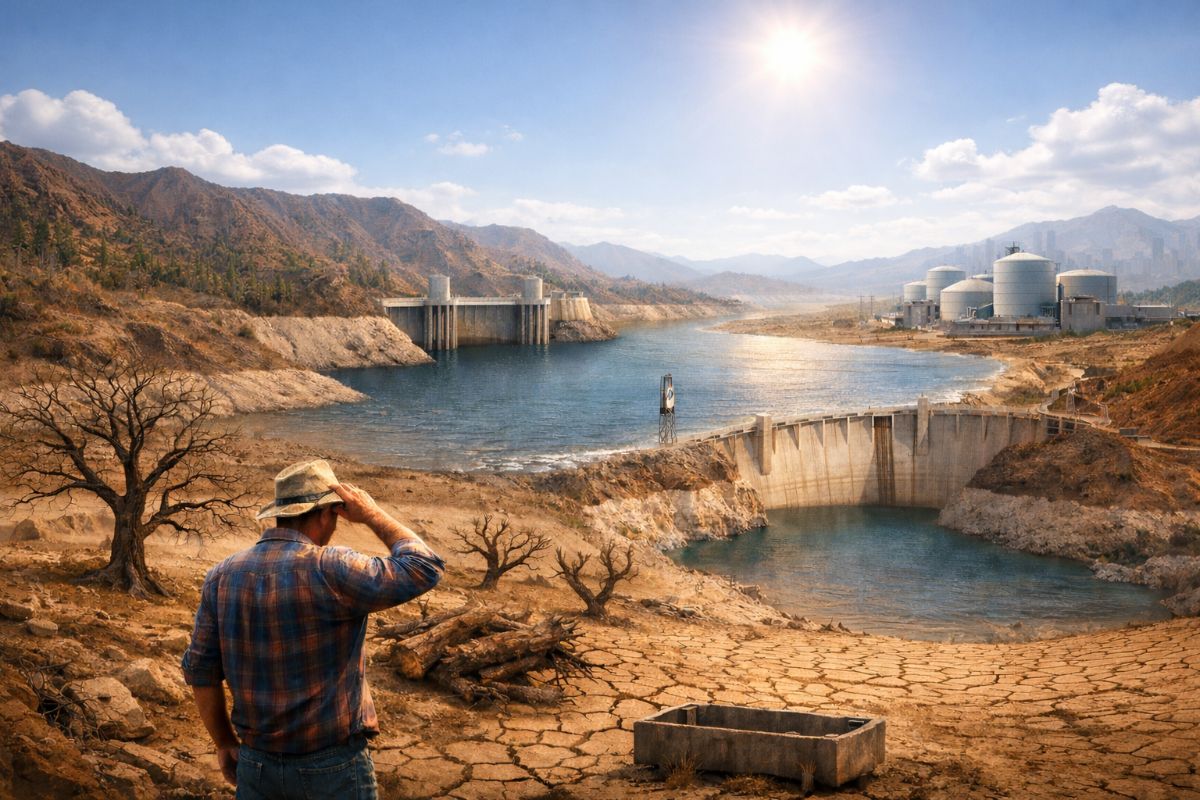
Hi guys, I am Festus and today, I will be exploring “ Once Again, the Earth Is Being Wrung Dry” by Farhad Manjoo. In this article, Manjoo delves into the scientific and societal impacts of the ongoing drought crisis in the American West. Drought, unlike other more immediate natural disasters, unfolds gradually and often goes unnoticed until it has caused irreversible damage. This phenomenon, while natural, is now being compounded by human-induced climate change, making it more severe and frequent than ever before. Drought is a prolonged period of abnormally low precipitation, leading to a deficit of water in various ecosystems. It is commonly classified into four types: meteorological, agricultural, hydrological, and socioeconomic, each affecting different sectors like water supply, agriculture, and economic activity. Manjoo emphasizes that while droughts are natural, their increasing frequency and intensity are being exacerbated by global warming. Rising temperatures contribute to increased evaporation, reduced snowpack, and shifting rainfall patterns, all of which make regions like the American West more susceptible to severe and prolonged droughts. Currently, the American West is experiencing one of the worst droughts in its recorded history. Nearly 98% of the region is facing some level of drought, with more than half of the land under extreme or exceptional conditions. This region, known for its agricultural and energy production, is being hit particularly hard. Farmers, especially in California, are losing crops and being forced to slaughter livestock earlier than expected due to water shortages. Almond orchards, for example, are being uprooted because of their high water demands. The economic consequences of this water scarcity are profound, as agriculture is a multi-billion-dollar industry that supplies much of the country’s food.
The drought is also affecting energy production. Lake Mead, a vital water reservoir for hydroelectric power generation, has seen its water levels drop drastically, reducing its ability to generate electricity. Hydroelectric power is a renewable energy source crucial to the region's energy grid. As these water levels continue to fall, the risk of blackouts and power shortages increases, particularly in a region that is already struggling to meet energy demands.
This escalating crisis is a direct result of climate change. Studies show that as global temperatures rise, the frequency and intensity of droughts increase. Research by NASA has shown that California’s snowpack has decreased by 30% over the past century, reducing water availability. Moreover, the warming climate is altering precipitation patterns, leading to longer dry spells and shorter, more intense periods of rainfall. These changes are more than just cyclical natural phenomena; they are clear indicators of the effects of climate change on local weather systems. For every 1°C increase in global temperature, the risk of droughts rises by 10%, due to increased evaporation rates and reduced soil moisture.The current system of water management in the American West, based on outdated frameworks, is ill-equipped to handle the pressures of climate change. Water rights in the region follow a seniority-based model, which disproportionately favors agricultural use. This has led to significant inequities, especially in times of water scarcity, when agriculture, which is responsible for 80% of California’s water use, continues to consume vast amounts while urban areas and ecosystems receive less. Manjoo argues that this system must be reformed to ensure a more equitable distribution of resources and better adaptation to the changing climate.
Technological solutions could play a significant role in mitigating the effects of drought. Smart irrigation systems, which use sensors and data to optimize water use in agriculture, can reduce water waste by up to 50% while maintaining crop yields. Additionally, water recycling technologies, which allow wastewater to be reused for irrigation and industrial purposes, offer a sustainable solution to growing water demands. Desalination, the process of removing salt from seawater, also presents a long-term option for providing fresh water, particularly in coastal regions. Although desalination is currently energy-intensive and expensive, advances in technology may make it more viable and cost-effective in the future. However, these technologies alone are not enough. Manjoo stresses that the U.S. must implement broader systemic changes to its water management policies. The region’s current system, which relies heavily on agriculture, needs to be replaced by a more dynamic and equitable water allocation system. Policymakers must also focus on improving infrastructure, investing in water storage, and implementing efficient water pricing mechanisms. More importantly, there needs to be a shift from reactive to proactive water management, preparing for future droughts rather than merely responding to them when they occur.
In conclusion, while the drought in the American West is a natural event, its severity is now deeply tied to human-driven climate change. The region’s outdated water management systems, coupled with an increasing demand for water, are unsustainable in the face of the changing climate. Technological innovations, such as smart irrigation and water recycling, offer solutions, but these must be complemented by significant policy reforms. The time to act is now, as the longer we wait, the more difficult it will be to secure water for future generations. Manjoo’s article serves as both a warning and a call to action: without comprehensive, long-term planning, the drought crisis will continue to worsen, with far-reaching consequences for agriculture, energy production, and overall human livelihoods.