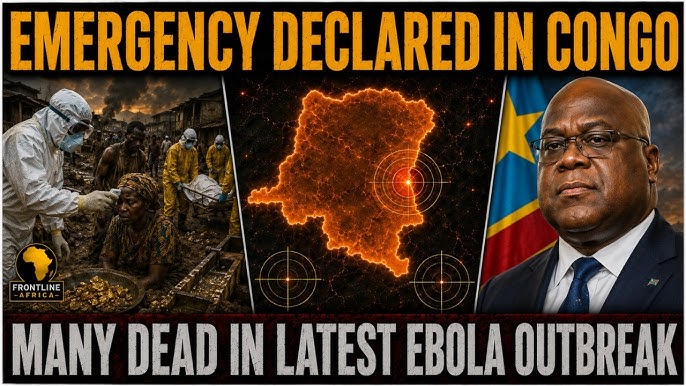
In the eastern Congolese town of Rwampara, the usual bustle around the general hospital has been replaced by a tense, almost reverent quiet. Only the scrape of stretcher wheels and the muffled instructions of medical staff in full protective suits break the stillness as bodies are sealed into disinfected coffins and carried away.
Families cluster in the courtyard, their wails rising over the low hum of generators powering isolation wards. For many, the speed of the illness has been as shocking as its brutality.
Among them is Botwine Swanze, still struggling to understand how her son’s complaints turned into a death sentence. He first spoke of a pain in his chest, which she mistook for a stomach problem. Within hours, the pain intensified, followed by relentless vomiting and, finally, heavy bleeding. By the time he reached the hospital, there was little doctors could do.
Nearby, Alicama Bitunda sits facing a row of coffins, mourning both her niece’s child and, soon after, her niece herself. What began as fatigue and what looked like malaria quickly escalated. Her niece developed severe vomiting and diarrhea, a burning sensation in her throat, and a swollen abdomen. She died before test results confirmed Ebola.
Health authorities say the outbreak is being driven by the rare Bundibugyo strain of the virus, a variant that initially evaded detection when laboratories were searching for a more common strain. That delay allowed the disease to circulate silently through communities in Ituri and North Kivu provinces and across the border into Uganda.
Dozens of confirmed infections have now been recorded, with health officials warning that suspected cases and deaths number in the hundreds. The World Health Organization has classified the situation as a public health emergency, citing the scale and speed of transmission and the risk of further regional spread.
Rwampara General Hospital, already stretched, is racing to convert a large tent in its courtyard into a dedicated Ebola treatment center. Patients will be isolated there in an effort to protect other wards and staff, but doctors acknowledge they are still chasing the virus.
Field teams from international medical organizations and local health workers are moving from village to village, tracing contacts, testing the sick, and trying to persuade fearful residents to report symptoms early. Yet, as Rwampara buries more of its dead, the sense on the ground is that the outbreak is still gaining ground, not losing it.