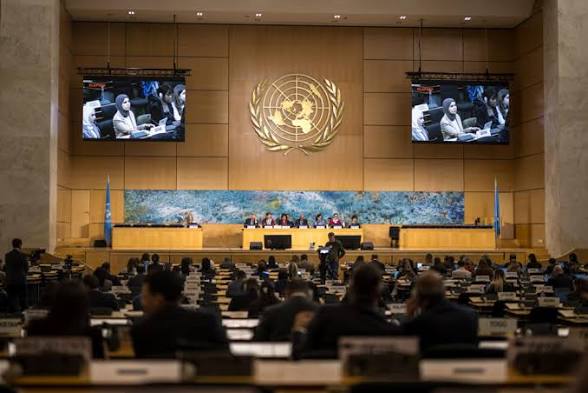
The United Nations Human Rights Council has adopted a resolution denouncing a surge in attacks by Sudan’s Rapid Support Forces (RSF) and allied militias in and around the strategic city of el-Obeid in North Kordofan, as the country’s devastating war grinds on.
The text, tabled by Britain, Germany, Ireland, the Netherlands and Norway, passed without a vote, signalling broad — though not unanimous — support among member states. It condemns the RSF’s escalating violence, urges all parties to halt abuses against civilians, and calls for unhindered humanitarian access to communities cut off by fighting and siege tactics.
The resolution also appeals for increased international support to countries hosting millions of Sudanese refugees and displaced people, and denounces all forms of external interference that fuel the conflict, including arms transfers and backing for proxy forces.
Several states, including China, Cuba, Egypt and Pakistan, formally distanced themselves from the consensus. Their representatives objected in particular to references to the independent fact-finding mission already mandated by the council to investigate violations in Sudan, arguing that such mechanisms risk politicising the crisis and duplicating existing efforts.
During an urgent debate, UN High Commissioner for Human Rights Volker Türk issued what he called a “red alert” over the situation in and around el-Obeid. He warned that patterns of ethnically targeted attacks, sexual violence, and indiscriminate shelling raised the spectre of atrocity crimes, and urged governments with influence over the warring parties to act immediately to prevent a new wave of mass killings.
El-Obeid, a key commercial and military hub linking Khartoum, Darfur and the south of the country, has become a focal point in the struggle between the Sudanese Armed Forces and the RSF. Control of the city would give the RSF a critical logistical corridor and further weaken the army’s already strained supply lines.
The war, which erupted from a power struggle between the two forces, has killed tens of thousands of people and displaced about 13 million, one of the largest displacement crises in the world. Large swaths of the population are facing famine-like conditions, and more than 30 million people now require humanitarian assistance.
The council’s resolution stops short of new sanctions or enforcement measures, but it reinforces international scrutiny of the RSF and its commanders and adds diplomatic pressure on all parties to halt attacks on civilians in el-Obeid and across Sudan.